240,000 attendees expected at Gulf oil conference as war fears rise
Residents across the Middle East brace for potential US strikes after midterms, even as diplomats signal a possible diplomatic pause.
By Lucas Murphy ·
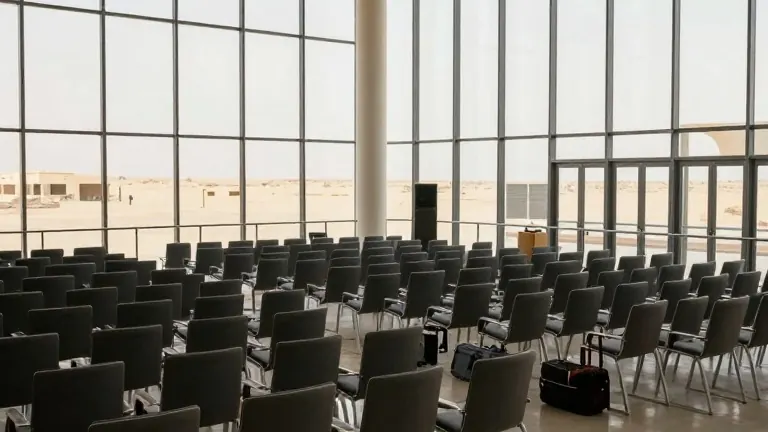
Nearly 240,000 people are expected to attend a major oil conference in Abu Dhabi next week, despite growing fears that a war between the United States and Iran could restart. The event is scheduled to proceed with strong American participation, including more than 120 exhibiting companies, according to the organizer DMG.
The conflict entered its eighth month this week after the United States and Israel launched strikes in February that killed Supreme Leader Ali Khamenei. Both sides remain in a stalemate, with neither side making diplomatic progress or breaking the military impasse. President Donald Trump has offered limited clarity on his endgame, oscillating between threats of further strikes and openness to diplomacy.
Tensions have risen following the recent US midterm elections. Trump wrote on social media earlier this month that Washington would not attack Iran before the elections. He has not ruled out renewed fighting afterward. This ambiguity has left residents anxious. A 36-year-old American living in Saudi Arabia said the mood has shifted and that people are treating the situation as a waiting game.
Foreign workers in Gulf Arab states, who have historically enjoyed stability in the region, now face disruption. Iranian missile and drone barrages in early months of the war disrupted schools, travel, and business. Many residents stayed put, citing confidence in local militaries. However, practical concerns are mounting. In Abu Dhabi, two US oil firms canceled plans for executives to attend the upcoming conference due to security concerns.
Diplomatic efforts continue in parallel with military posturing. US Vice President JD Vance sent a letter to Iran's top security official, Mohsen Rezaei. Iranian media reported the Islamic Republic is reviewing the document. Trump claimed the letter related to a request for medical supplies. Iranian officials are currently in Qatar for talks, though a Qatari official noted that no US delegation was present on Saturday.
US Ambassador to Turkey and special envoy to Syria and Iraq Tom Barrack told CNN that he expects dramatic steps in the next two weeks. He described the current moment as close to a time out, but noted it is a matter of trust and who goes first. Secretary of State Marco Rubio said the administration would be open to a diplomatic solution if it does not endanger national security or fail to meet core concerns regarding Iran's nuclear program.
Iranian officials maintain they are open to diplomacy but lack trust that talks will stop military strikes. They cited past occasions when they were attacked during negotiations. Mohammad Bagher Ghalibaf, the Iranian parliamentary speaker leading negotiations, stated that Iran's conditions have been clearly stated to mediators. He said the carrot-and-stick approach has no effect on Iran and that progress can only be achieved once Iran's seven conditions are agreed upon.
In Bahrain, which suffered heavy attacks earlier this year, residents reported feeling the psychological impact of the war. A 21-year-old named Fawaz said the sound of bombings still affects his ability to sleep. In Saudi Arabia, major events were canceled and offices moved to remote work after Houthi rebels intensified strikes. Residents there worry a return to war would add pressure to a country already dealing with a southern border conflict.
US troops have been dispatched to the region, according to the Associated Press. Families of US diplomats have begun leaving discreetly. Their departures became known after children said goodbye to classmates at school. Many of those leaving had recently returned to their posts after being ordered out in March. The sudden exits have created a sense of chaotic deja vu among those still in the region.
Source: CNN