Italy tightens security as young protesters return to the streets
New demonstrations are planned across eight cities after a government crackdown followed clashes in Milan last week.
By Yasmin Kovalenko ·
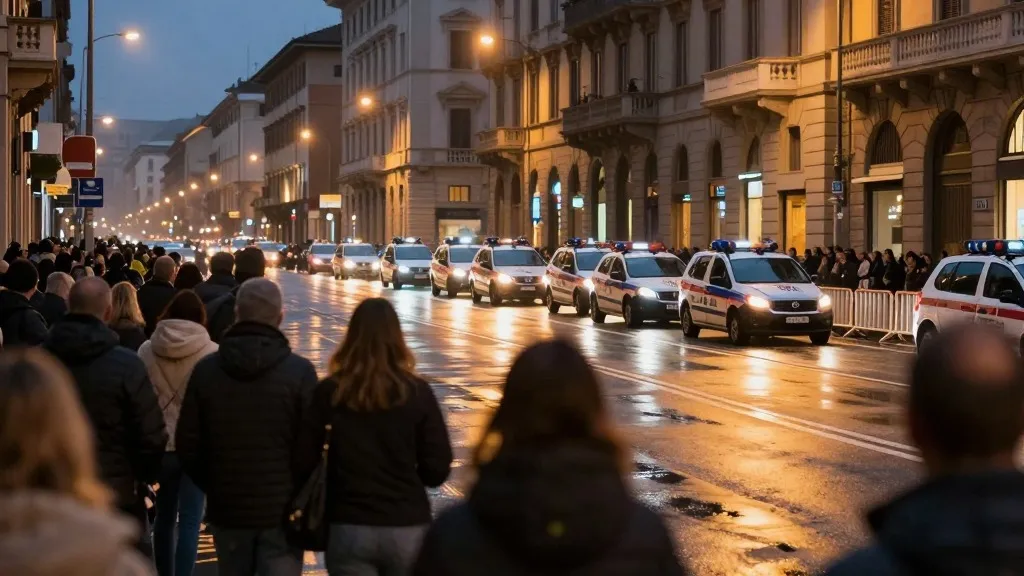
For many families in Italy, the coming Saturday brings a renewed sense of uncertainty as security forces prepare for a new round of demonstrations. The government has moved to increase its police presence in response to a week of unrest that left many residents feeling the stability of daily life was under pressure. These protests are not isolated events but part of a broader movement driven by concerns over the rising cost of living and a growing sense of distrust toward the current right-wing administration. For ordinary citizens, the immediate impact is a visible shift in how the state manages public spaces and interacts with its younger population.
The scale of the upcoming mobilization is significant, with organizers calling for protests in eight different cities. This follows a turbulent weekend in Milan where demonstrations turned into clashes with police and instances of looting. The government responded quickly by announcing new security measures, which include deploying 500 soldiers to Milan, the country's financial hub. Police also conducted raids and searches in several cities on Friday, targeting individuals suspected of participating in the rioting. By Saturday morning, officers had carried out an additional 150 raids in the northern region of Lombardy, signaling a sustained effort to identify those involved in the previous weekend's disturbances.
The driving force behind these demonstrations is a recently formed coalition known as the October 17 Movement. This group has allied with student federations, grassroots trade unions, and antiwar coalitions to organize the protests. On social media, the group expressed its frustration, stating that it distrusted the government because it viewed it as authoritarian. One post on Instagram argued that those denying the future of young people were themselves violent. Organizers have emphasized that they intend to keep the specific locations of the gatherings secret until the last minute to maintain their element of surprise. Three meeting points are expected to be announced on social media accounts on Saturday afternoon.
The participants in these protests are predominantly young, a fact that has raised concerns for parents and officials alike. Last Sunday, 271 people were detained, and the majority of them were minors. Specifically, 220 of the detained individuals were under the age of 18. Reports from local media suggest that some of these young people joined the protest after being unexpectedly added to a communication group by friends. One of the arrested teenagers explained that they were told the group would create chaos and that they could take many goods. This dynamic highlights how social media platforms have become central to mobilizing the next generation of protesters.
Legal experts and family members are now grappling with the consequences of these arrests. Michele D'Agostino, a lawyer defending two demonstrators aged 21 and 15, noted that the younger client did not even know the reasons behind the protest. He had simply seen it on a popular video platform and decided to check it out with a friend. D'Agostino clarified that the teenager was not among those who looted but did not fully grasp the seriousness of the situation. This case illustrates a disconnect between the digital call to action and the physical reality of the protest.
The public prosecutor has pointed to social media as a key factor in misleading young people into what he described as insurrectional acts. In response to the high number of minors involved, Justice Minister Carlo Nordio suggested that the country needed to expand the capacity of its youth detention facilities. This proposal has sparked debate about how the judicial system should handle the growing number of young people involved in civil unrest. The government's approach appears to be focused on a firm response to restore order while addressing the underlying economic grievances of the population.
Meanwhile, the pressure on working families is not limited to the streets. Earlier this week, truck drivers in several regions of southern Italy set up roadblocks to protest soaring fuel prices. These disruptions left many markets without supplies for days, directly affecting the prices consumers pay for essential goods. In an effort to ease this pressure, the government granted tax breaks and created a special fund for farmers and fishermen on Thursday. This parallel struggle in the transport and agricultural sectors underscores the broader economic challenges facing the country.
As the new demonstrations begin, the focus remains on how the government and the protesters will interact. The movement has called for peaceful dissent, with participants warning that any sign of aggression could give police an excuse to charge. One member identified as E said that if they give the police an excuse, they will charge against them. Another member, identified as Q, argued that there is no distinction between violent and peaceful protesters, claiming that it is just us. This sentiment reflects a deep sense of unity among the demonstrators as they face a more prepared security force.
The stakes for the coming days are high. The government aims to show that it can manage the unrest without appearing heavy-handed, while the protesters seek to make their voices heard on issues that affect their daily lives. With the cost of living remaining a primary concern, the outcome of these protests could influence future policy decisions. The involvement of young people in such large numbers suggests that this is not a temporary flare-up but a sustained demand for change. As the week progresses, the attention of the nation will turn to how these eight cities handle the intersection of civic duty and state security.
Source: Al Jazeera