Judge sets date for trial of ex-Chihuahua chief accused of treason over CIA deaths
Federal prosecutors seek 5 to 40 years for César Jáuregui, who approved U.S. agents in a drug raid that killed two people.
By Lucas Murphy ·
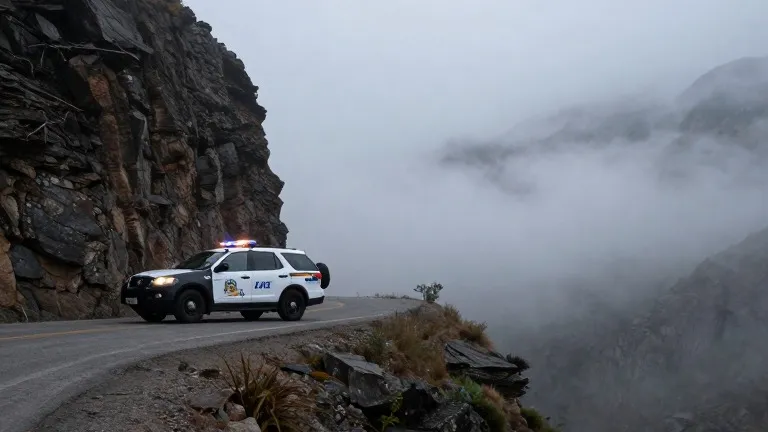
A federal judge is scheduled to decide on Saturday whether former Chihuahua Attorney General César Jáuregui must stand trial on a treason charge. The accusation stems from an April 19 operation to dismantle a drug lab in the municipality of Morelos. Two state officials and two Americans died when a vehicle in the return convoy plunged into a ravine.
Federal prosecutors argue that Jáuregui endangered national security by approving the participation of U.S. agents in a field operation without notifying the federal government. That decision is legally reserved for federal authorities. If convicted, Jáuregui faces a prison sentence of five to 40 years.
Jáuregui was arrested on Oct. 17 on state charges of illegally exercising public office. A judge ruled Thursday that those state charges can proceed to trial. Federal officials subsequently added the treason indictment. Defense attorney Héctor Villasana said prosecutors told a closed hearing they wanted an exemplary punishment to prevent a situation like the U.S. removal of Venezuelan President Nicolás Maduro.
The case has become a flashpoint over foreign involvement in Mexican law enforcement. President Claudia Sheinbaum has emphasized national sovereignty, and her administration expelled two other U.S. agents traveling in a separate vehicle during the same operation. Sheinbaum stated that none of the Americans had permission to operate in Mexico.
Legal experts doubt the treason charge will hold. Samuel González, a former chief prosecutor for organized crime, described treason as a wartime crime. He said Jáuregui may have failed in his obligations by not informing federal authorities or by allowing foreign agents to carry weapons, but that this would not amount to treason. Carlos Pérez Ricart of the CIDE university called the case a political decision ahead of the 2027 midterm elections. He warned it sends a very bad signal to Washington.
Accounts of the Americans' roles have varied. U.S. Ambassador Ronald Johnson called them embassy personnel, while multiple people familiar with the matter told CBS News they were CIA agents. The CIA declined to comment. Mexico's security ministry said one entered as a visitor and the other with a diplomatic passport, and that neither had formal accreditation for operational activities.
Jáuregui resigned after the deaths to clear the way for an inquiry. He described the Americans at the time as instructor officers carrying out training tasks under binational anti-drug cooperation. He called the targeted labs one of the largest sites found in the country where chemical drugs were produced. The operation ended without arrests because the suspects fled. The U.S. State Department said it is aware of and watching the case but did not link it to the CIA deaths.
Source: CBS News