Mayor Wright Complex to Transform with 2,400 New Homes
A 15-acre site in Kalihi-Palama will undergo a massive overhaul, replacing aging infrastructure with a mixed-income community that includes thousands of new rental and sale units.
By Lucas Murphy ·
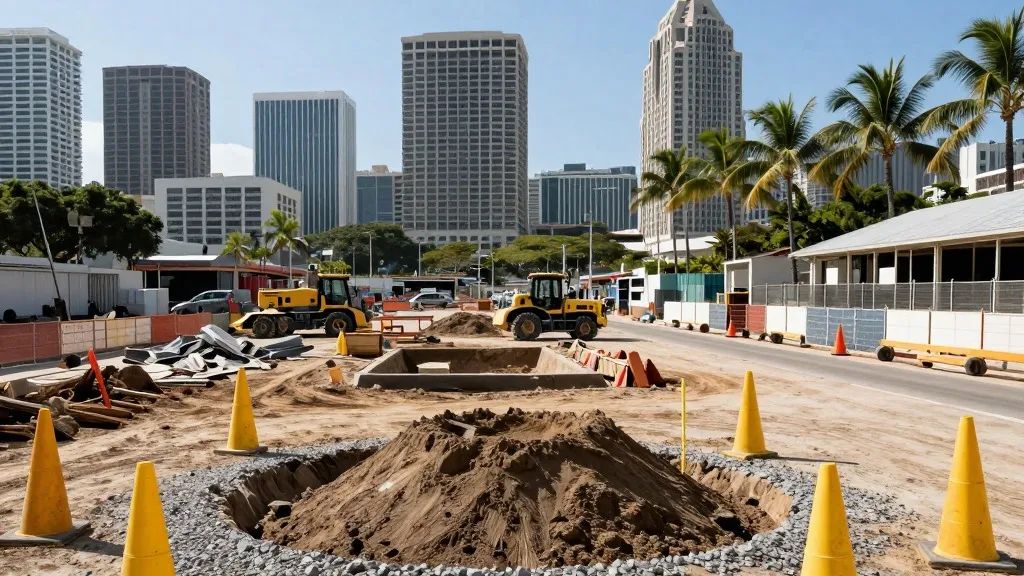
The first concrete steps toward reshaping one of Hawaii's most significant public housing sites were taken this week. State leaders and local community figures gathered on Thursday to mark the start of construction for the initial phase of the Mayor Wright Homes project. This development is widely considered the largest public housing undertaking in the state's history. The sprawling 15-acre parcel is located in the Kalihi-Palama area, just a short distance from downtown Honolulu.
The Hawai‘i Public Housing Authority, working alongside developer Highridge Costa, is set to replace a complex that has served the community for nearly 75 years. The existing site is defined by the borders of King Street, Liliha Street, and Vineyard Boulevard. According to organizers, the new layout will accommodate seven times the number of homes currently found there. A key shift in the design is the move toward a mixed-income model. Instead of serving only very low-income families, the new towers will host residents across a broader range of economic backgrounds.
Hakim Ouansafi, the executive director of the housing authority, framed the ceremony as more than just a symbolic gesture. He emphasized that the event represented a breaking of barriers rather than just a start to physical labor. Ouansafi noted that the state needs new methods to tackle future housing challenges, as old strategies are no longer sufficient. He argued that the project is a step toward modernizing how the state approaches these long-standing issues.
The architectural plans are extensive. The development will feature more than 2,400 new rental units, with sizes ranging from small studios to large five-bedroom apartments. The project also includes space for public housing, condominiums available for purchase, and commercial areas. All of these components will be distributed across ten distinct towers. This vertical approach is designed to maximize the use of the available land while providing diverse living options.
Affordability remains a central focus of the project's structure. More than half of the total units are reserved for tenants whose income is below 80% of the area median. Subsequent phases of the development will expand this eligibility to include households earning up to 100% of the area median income. For a family of four, this income threshold is approximately $150,000 per year. To address concerns about displacement, current residents who must move out during construction are being relocated. They have been granted priority status to return to their homes once the work is complete.
Governor Josh Green highlighted the project's role in the broader state housing strategy. He described stable housing as a foundation for health, noting that when people have a secure place to live, they are better able to focus on education, food security, and medical care. Moe Mohanna, president of Highridge Costa Development Company, expressed appreciation for the state's willingness to undertake such a large scale initiative. Mohanna described the effort as a legacy being built for the future.
Ouansafi also stressed the importance of dignity in public housing. He stated that residents deserve safe and modern living spaces within communities that do not concentrate poverty. He rejected the notion that public housing should be considered second-class, advocating for a standard of living that respects all residents equally.
The financial scale of the project is significant. The housing authority estimates that the first phase, labeled Phase 1A, will cost $333 million. Back in 2017, the state estimated the total cost of the entire redevelopment at $1.3 billion. Beyond housing, the site will include four acres of public parks and recreational areas. The location is also strategically planned to be within walking distance of the proposed Iwilei rail station.
Honolulu Mayor Rick Blangiardi connected the housing project to the arrival of the Skyline rail line. He viewed the combination of these two developments as a historic and unprecedented moment for affordable housing in the city. The first building in the complex is scheduled to open in 2029. The full redevelopment is expected to take 15 years to complete. Those interested in learning more can visit mayorwrighthomes.com for additional details.
Source: Hawaii News Now
More News · Honolulu news · Report a business · Got a Story?