Macron's Government Reports 980 Detentions as France's Second Protest Wave Ends in Clashes
Police deployed 70,000 officers to manage demonstrations that drew between 410,000 and 800,000 participants, resulting in tear gas and water cannon usage across major cities.
By Yasmin Kovalenko ·
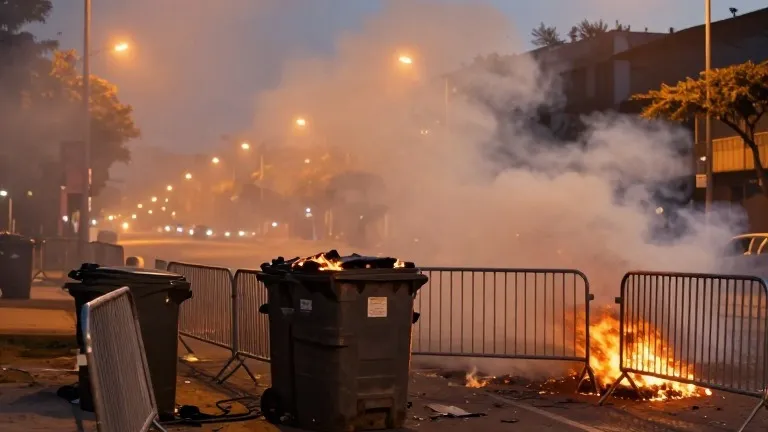
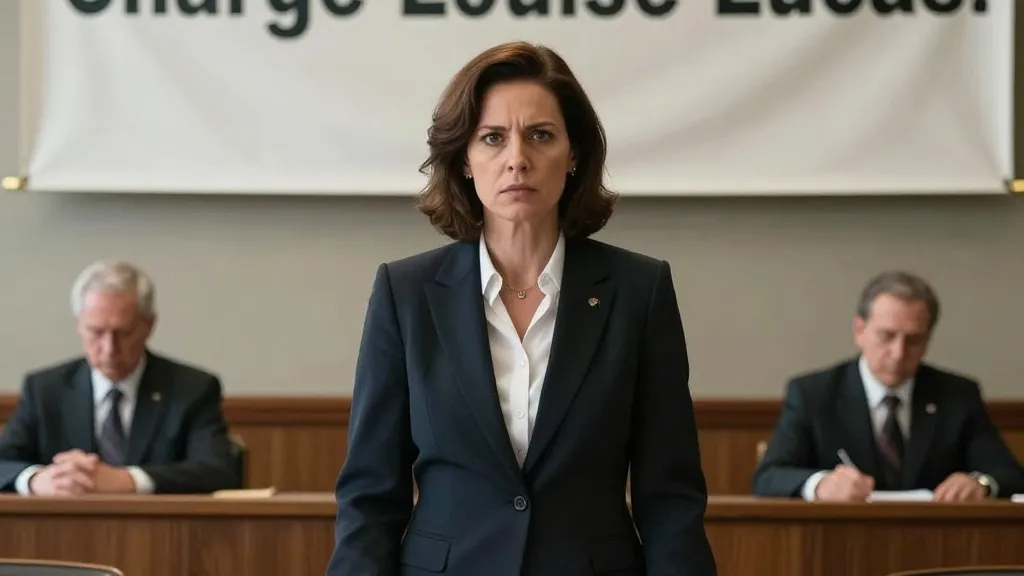
French Interior Minister Laurent Nuñez confirmed on Saturday that 980 people had been detained as nationwide protests against cost of living and school conditions turned violent in the evening. The figure is expected to rise, according to the minister, who also reported two serious injuries, one in Toulouse and one in Clermont-Ferrand. This marks a sharper enforcement response than the previous week, when police were outnumbered and disorder spread more widely.
The Interior Ministry estimated turnout at 410,000, while labor unions counted approximately 800,000 demonstrators. To prevent a repeat of the chaos seen last weekend, authorities deployed 70,000 police officers and imposed movement restrictions in several cities. The goal was to keep the demonstrations, which were largely peaceful during the day, from sliding into the looting and arson that characterized the protests a week earlier.
In Paris, trouble emerged as a march from Porte d'Italie toward Porte de Vincennes concluded. Police utilized an elite unit typically assigned to counter-terrorism and organized crime. Protesters constructed makeshift barricades and threw objects at officers. In return, police charged with batons at groups of masked youths who were breaking windows at a car dealership. Nuñez stated that several thousand radical activists gathered at the rear of the march, including about 500 identified rioters.
Violence in Marseille involved burning barricades and metal sheets used to block streets. In Bordeaux, witnesses saw people tearing boards from a shop. In Lyon, police fired tear gas to disperse a crowd in an area the local prefecture had declared off-limits. One protester, a student among a group of roughly 150, told the BBC, "You could barely see anything in the street."
President Emmanuel Macron decreed earlier in the week that only demonstrations organized by recognized trade unions would be permitted. In the days following last weekend's unrest, hundreds of people faced fast-track court hearings and were jailed for vandalism, arson, and looting. The strict approach reflects the government's effort to control the narrative before presidential elections begin in six months.
Demonstrators expressed deep frustration with their economic circumstances. Zelie, a 26-year-old protester in Paris, told the BBC that people are "suffering a lot" and that "it's been too much." Two masked teenagers described their generation as feeling abandoned by the government. One admitted that looting was "really not good" but blamed poverty and police violence, adding that the protests would continue until demands were met.
In Orléans, about 13,000 people rallied peacefully against the hard-right National Rally party. The unrest in France also had international echoes. Riot police fired tear gas at anti-government demonstrators in Tirana, Albania, and clashes were reported in Brussels. In Milan, hundreds of soldiers and police prevented protesters from gathering amid fears of a repeat of the previous week's violence.
Last weekend, approximately 550,000 people demonstrated against fuel prices and living costs. That protest resulted in more than 2,500 arrests and damage to over 2,000 shops and businesses, with the Chambers of Commerce and Industry estimating losses in the hundreds of millions of euros. About 1,000 police officers were injured, and one demonstrator lost a hand to a crowd-control grenade. Leading presidential contenders have since blamed Macron and his ministers for the instability.
Source: BBC News
More Politics · World news · Report a business · Got a Story?