Melania Trump ceasefire allows Oleshky evacuation
Residents of a Russian-occupied Ukrainian city are boarding buses under a truce that expires Sunday, though some fear the escape route leads into Russia.
By Lucas Murphy ·
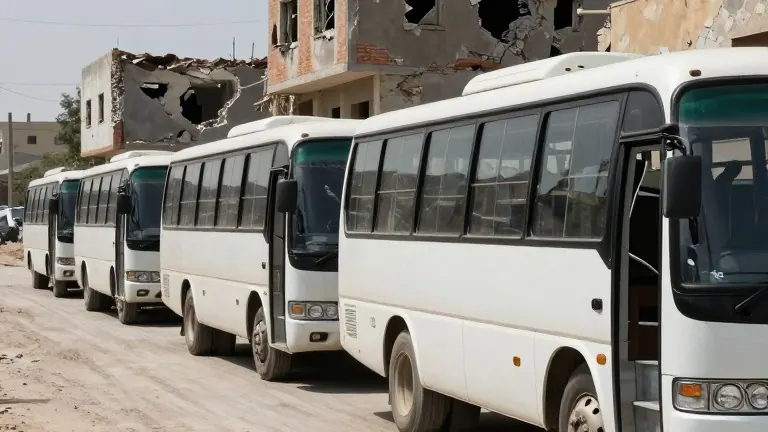
Residents of Oleshky, a devastated city in Ukraine, faced a difficult choice on Friday: board evacuation buses under a rare ceasefire or remain in a city where survival supplies have nearly vanished. The truce, brokered by First Lady Melania Trump with the involvement of Pope Leo XIV, created a localized pause in fighting that Ukrainian officials described as one of the most substantial since the full-scale invasion began more than four and a half years ago. Despite the progress, anxiety lingered among those preparing to leave.
The primary concern for many residents is their destination. Although Oleshky sits just across the Dnieper River from Ukrainian-held Kherson, the planned escape route to Ukrainian-controlled territory passes through Russia and its ally Belarus. Some residents told Sky News they feared authorities would stop them at the border, preventing them from reaching Ukraine. This uncertainty forced families to weigh the dangers of staying against the risk of being stranded in Russian territory.
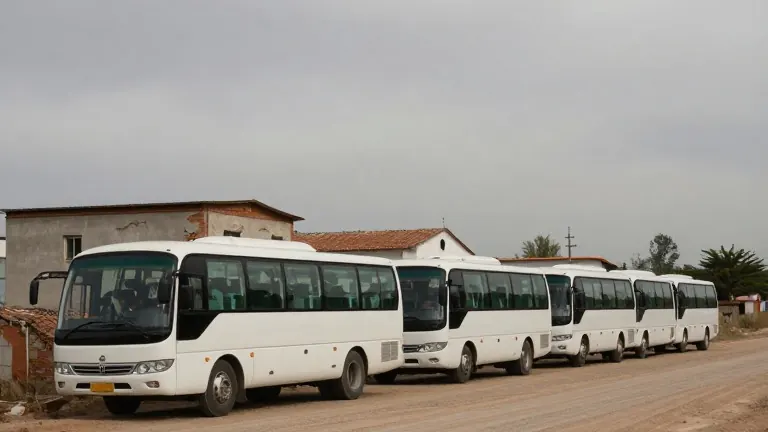
Russian human rights commissioner Yana Lantratova said the operation involved 25 buses with a combined capacity for 750 passengers, nine ambulances, and more than 50 medical professionals. Designated routes into the city had been cleared of mines. Lantratova stated in a video posted on Friday that people wishing to leave for the Russian Federation were gathering, alongside those seeking to reach Ukraine. She added that everyone would be given the opportunity to proceed in their chosen direction.
Ukrainian human rights ombudsman Dmytro Lubinets confirmed his presence in Oleshky, noting that the ceasefire had held for more than 80 hours. He said he was speaking directly with local residents to identify their most urgent needs. The city’s condition has deteriorated sharply since May, with the dominance of drone warfare making aboveground travel extremely dangerous. Services and supplies have dwindled to a point where the population, estimated at 2,000, survives on small amounts of grain and edible weeds, down from a pre-invasion population of more than 20,000.
The diplomatic effort began when Pope Leo XIV called Russian President Vladimir Putin on October 16 to express deep concern and urge a pause in fighting. The first lady’s office said she learned of the city’s plight during a United Nations gathering in September and used contacts developed through her efforts to reunite Ukrainian children with their families to help secure the truce. The ceasefire was announced on October 23 and took effect on Tuesday. It is scheduled to expire at 10:59 p.m. Kyiv time on Sunday.
Dmitry Peskov, Putin’s spokesman, suggested the truce could serve as a model for other locations. He told journalists on Monday that for humanitarian purposes, the arrangement absolutely could be replicated. He emphasized the direct and positive involvement of American negotiators and First Lady Melania Trump, stating that Russia greatly values these efforts and that the process could set a precedent.
Outside the relative calm of Oleshky, the war continued with intensity. Ukraine’s air force reported that Russian strikes hit 17 locations overnight. Air defenses shot down or suppressed 96 drones and three missiles. Separately, drone manufacturer Fire Point announced that Ukraine had used its FP-1 drones to strike the Novokuibyshevsk oil refinery in Russia’s Samara region. Ukrainian officials have not yet commented on that specific attack.
Source: NBC News