Moscow Airspace Closures Disrupt Russian Air Travel
Russian airports have suspended operations for hours at a time under a military safety protocol triggered by Ukrainian drones.
By Lucas Murphy ·
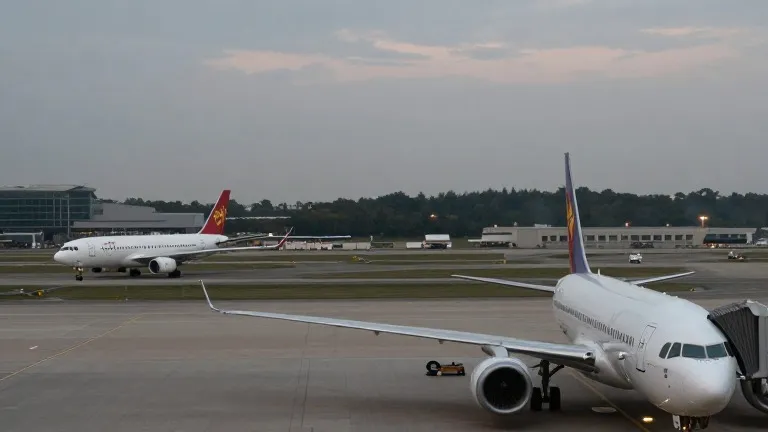
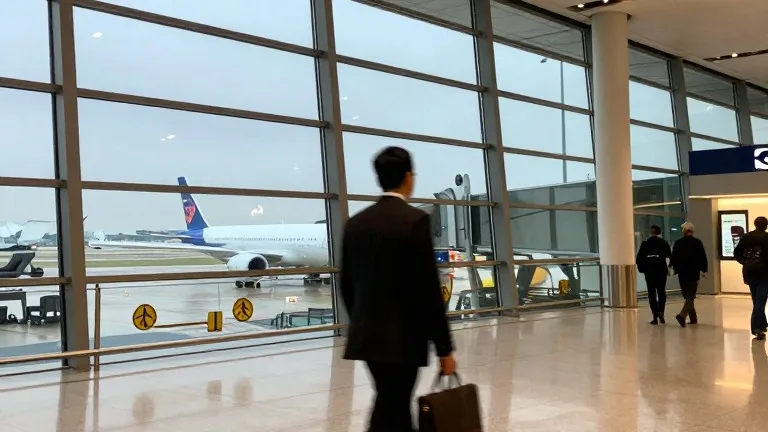
Moscow's four main airports have stopped flights for parts of most days this month, a disruption driven by a Russian safety rule that closes airspace when unidentified aircraft appear overhead. Domodedovo, Sheremetyevo, Zhukovsky and Vnukovo have suspended operations almost daily in October, the independent outlet Agentstvo reported, with some closures lasting as long as nine hours.
The closures follow a stated policy from President Volodymyr Zelenskyy, who said in early September that Ukraine intends to deny Russia the use of its own airspace. He addressed carriers and travelers directly: "Russian airspace will become completely unsafe." Ukraine sent a similar notice to the International Civil Aviation Organization the following day. Ukraine's own airspace has been closed since Russia's full-scale invasion began in February 2022.
Russia's aviation authority, Rosaviatsiya, runs the procedure that ends these flights. The agency refers to it as the carpet protocol, which closes airspace over a region whenever an aircraft violates Russian territory, weapons are used or unidentified objects enter the sky. Oleksandr Laneckij, chief executive of the consultancy Friendly Avia Support, said "essentially, every drone poses a military threat." He compared the disruption to the Houthi campaign that affected Saudi Arabia's airspace, and said Ukraine's capacity is far larger.
Military analyst Jan Matvejev said Ukraine can keep disrupting traffic around Moscow for as long as it chooses. Setting off the protocol, he said, requires only drones without warheads or long range, and Ukraine's industry can turn out hundreds of such drones a day. He also said Russian air defenses have failed to stop them. "If it were possible to shoot them down, they would have done so by now," Matvejev said, adding that Russia has not deployed additional air-defense troops. Writing in The Atlantic this month, Simon Shuster, citing people familiar with the matter, described Ukraine's efforts as "just getting started."
Both specialists flagged risks to passenger flights. Laneckij said Russia could lower the threshold for the carpet protocol, which he linked to the Christmas Day 2024 crash of an Azerbaijan Airlines jet; investigators said that aircraft was struck by a Russian air-defense missile fired against drones, killing 38 people. Matvejev said Russia's air-defense procedure has changed little since. He said drones need no explosives to cause damage, because an impact with an airplane can be severe, and that a drone traveling from Ukraine to Moscow must weigh dozens of kilograms.
Laneckij said foreign carriers will weigh three factors in deciding whether to keep serving Russia: the military threat, passenger demand and insurance costs. If insurers price the risk very high, premiums could rise sharply and push ticket prices up. Many Russian airlines have gone out of business, which has raised demand for seats on the foreign carriers that remain. "Whether they stay or not depends on the price they have to pay for the danger faced," he said.
Ukrainian forces have struck aviation sites on both sides. They attacked the Pskov airport in the summer of 2023, and drone debris reached Sochi airport earlier this month. Russia has hit Ukrainian airports as well; Zelenskyy said in September that Kyiv's airport and Boryspil, near the capital, were struck.
Source: Deutsche Welle