NHTSA Proposes Cyan Lights to Identify Driverless Vehicles
The federal rule would standardize lighting for robotaxis and remove legacy controls like steering wheels from safety requirements.
By Lucas Murphy ·
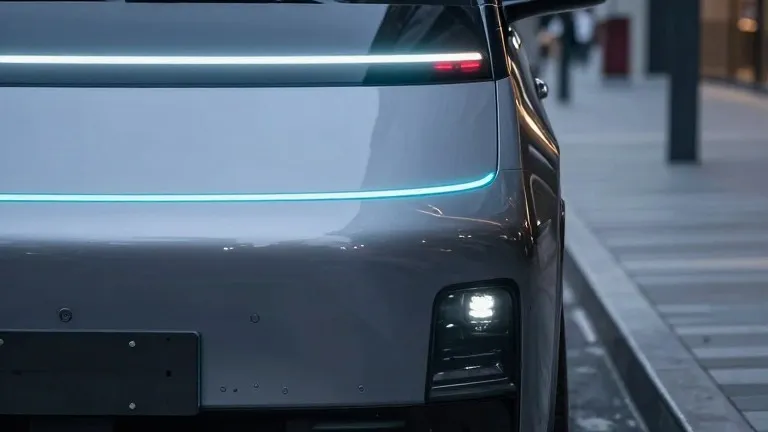
Drivers on U.S. roads may soon see a new visual cue indicating that a vehicle is being operated by an automated system rather than a human. The National Highway Traffic Safety Administration has proposed that autonomous vehicles use distinctive cyan lamps to signal their status to pedestrians, cyclists, and law enforcement.
The agency released proposed amendments to Federal Motor Vehicle Safety Standard No. 108 on October 23, 2026. The rule targets vehicle lighting configurations specifically for cars without human drivers. NHTSA stated that the cyan color was selected because it is not currently used for standard braking, turn signals, or emergency vehicle functions. This choice aims to fill a visual gap in traffic signals without creating confusion.
The proposal makes the cyan lights optional for manufacturers. However, any company that chooses to install them must adhere to strict federal requirements regarding brightness, color, and placement. NHTSA intends to replace a patchwork of company-specific designs with a single national standard. This approach would allow major operators like Waymo, Nuro, and Zoox, along with automakers such as GM and Mercedes, to use identical signaling methods across the country.
Mercedes-Benz previously received state-level approval for turquoise lights on its Level 3 Drive Pilot vehicles. The automaker has since shifted its strategy toward a Level 2++ system. Despite this industry shift, NHTSA maintains that a uniform federal standard is necessary to ensure consistency for all road users.
The rule also eliminates lighting requirements designed for human drivers. NHTSA proposes removing mandates for physical hazard switches, manual beam shifters, and turn levers inside the cabin. The agency will also update the 12.8-volt testing standard to accommodate modern LED systems. It is considering dropping rules that dictate the vertical placement of high-beam and low-beam lights.
These changes support a Department of Transportation effort to accelerate the deployment of driverless technology. The government aims to simplify the process for building vehicles that lack traditional controls like steering wheels and pedals. However, current federal standards still require these components for certification.
NHTSA continues to enforce existing rules while the new proposal is under review. Last month, the agency opened an audit query into the Tesla Cybercab. The review examines the technical data Tesla used to certify the vehicle, which currently lacks sideview mirrors, pedals, and a steering wheel.
Source: The Verge