Student List Challenges Vučić in Serbia's Closest Vote
A movement born from the Novi Sad tragedy forces a binary choice between a veteran leader and a collective of academics and athletes.
By Yasmin Kovalenko ·
Serbia heads to the polls on Sunday for a parliamentary election that analysts predict will be extremely tight. The race pits Aleksandar Vučić, the country's long-serving leader, against the Student List, a political movement formed by university assemblies in response to a fatal infrastructure failure.
The Student List emerged from nearly two years of anti-corruption protests that began after a canopy collapsed at a railway station in Novi Sad, killing 16 people. Instead of selecting a single nominee, student groups across university faculties chose 250 candidates. Ilija Srdanović, a cardiologist and professor at Novi Sad University, heads the ballot but does not hold formal leadership power. He described his role as supporting his students in their struggle, noting that the list features academics, engineers, and athletes with no prior political experience.
Vučić, who has held the offices of deputy prime minister, prime minister, and president since 2012, stepped down as president last month to run for the top executive job. He maintains strong support among voters who view him as a protector of national interests and point to a decade of economic growth. However, critics argue his Serbian Progressive Party dominates state media and institutions. An international observation mission following the 2023 vote cited an overwhelming ruling party advantage driven by media bias and the misuse of public resources.
The Novi Sad disaster complicates Vučić's position because the station renovation was part of his flagship high-speed rail project connecting Belgrade to Budapest. Magda Anastasijevic, an analyst at the conflict monitor ACLED, noted that Vučić has typically survived crises by identifying scapegoats, but the canopy collapse left him without that option. The student movement contends that the incident exposed systemic corruption and lack of accountability in state-managed projects.
Foreign policy has become a central campaign issue as Serbia balances EU membership talks with close ties to Russia and China. Both Moscow and Beijing refuse to recognize Kosovo's independence, a position that aligns with Vučić's stance. He warned at a rally that a Student List government might sever those links or impose sanctions on Russia. In contrast, the students emphasize domestic reform and transparency over traditional alliance-building.
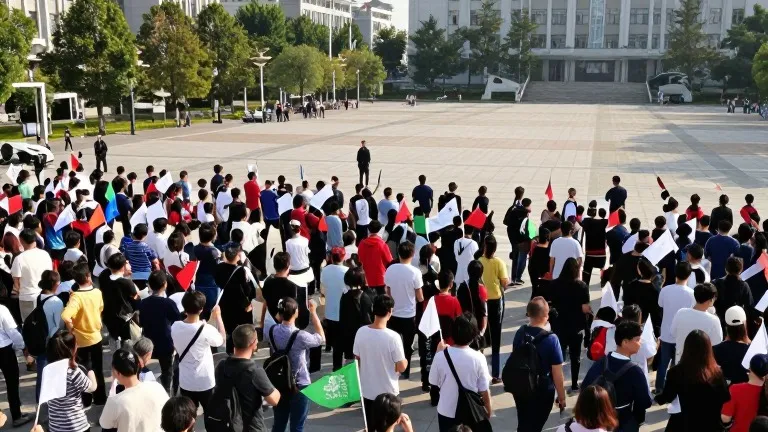
The closing campaign rallies illustrated the stark difference in political style. Vučić addressed a crowd at the Belgrade Arena as the sole speaker, reinforcing his image as a singular strongman. Meanwhile, approximately 150,000 people gathered in Belgrade's Slavija Square to listen to a rotation of student candidates. The electorate now faces a choice between continuing with a centralized leadership model or adopting a collective governance approach led by non-political professionals.
Source: BBC News