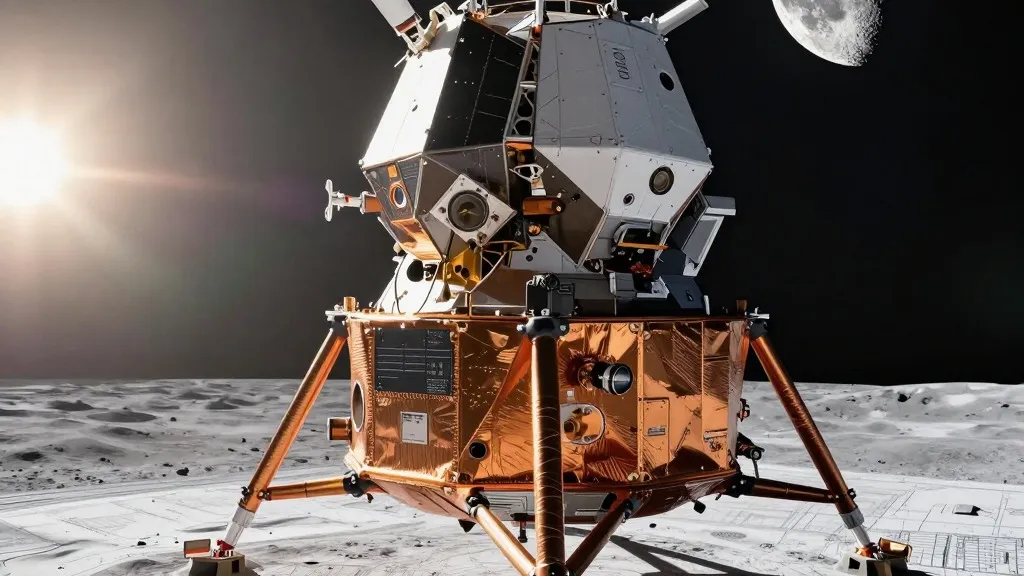
10,000 Residents: The Calculated Limit for Lunar Settlements
A new study reveals the moon's water reserves may cap sustainable settlements at 10,000 people.
By Jisoo Vega ·
A new analysis shows that the moon's water reserves may not be enough to support anything close to the large cities envisioned by some tech executives. SpaceX CEO Elon Musk and Blue Origin CEO Jeff Bezos have both spoken about building large settlements on the moon, but a study by Harvard physicists Martin Elvis and Jonathan McDowell suggests otherwise.
The researchers focused on two essentials for sustaining life on the moon: power and water. They found that solar and nuclear sources would be enough to sustain one million people on the lunar surface, but water is where the picture changes.
Water does exist on the moon, but most of it is believed to sit in permanently shadowed regions at the poles. Assuming roughly one billion tonnes of water, which is in line with current estimates, a population of one million could last only about 100 years. That figure depends on recycling 98 per cent of the water, the rate achieved on the International Space Station.
A smaller settlement, however, fares better. A town of 10,000 people would be sustainable for centuries under the same assumptions. But if the goal is to cover the face of the moon with cities, like in the best science fiction, then water will be a major obstacle.
The assumptions themselves may be generous. A billion tonnes is probably 20 or 30 times too big, and only one-third to one-half of the water present would likely be recoverable. Gordon Osinski, a professor of planetary geology, said satellite measurements carry uncertainties, and the water may be there in the form of sub-millimetre ice crystals mixed into soil that are hard to extract.
McDowell said the findings should not be read as discouraging. 'The truth is never negative,' he said. 'What's negative is to actually go and try and do something that isn't going to work.'
Source: CBC News