Tesla pivots to robotic self-education via new Optimus Academy
Tesla is deploying a massive internal fleet of robots to generate the training data necessary for its humanoid to function in unstructured environments.
By Yasmin Kovalenko ·
The transition from prototype to mass-market product is a critical inflection point for any hardware company, and Tesla is currently navigating that exact threshold for its humanoid robot program. As the company moves beyond experimental phases, the focus has shifted from proving that a robot can move to ensuring it can be manufactured, taught, and maintained at scale.
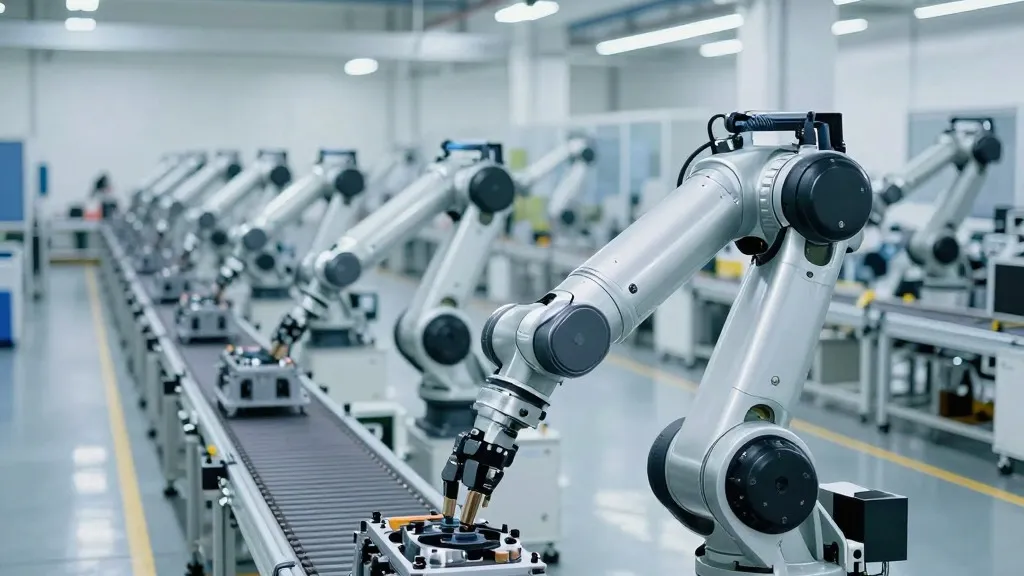
Tesla has officially begun building Optimus on a high-volume assembly line located within its Fremont factory. In its third-quarter shareholder letter, the company stated that the units rolling off this specific line represent the first production-quality bots it has manufactured. This declaration marks a significant milestone, as Tesla claims to have proven that the current manufacturing process is suitable for a commercial product rather than just an internal demonstration unit.
The infrastructure supporting this shift is already substantial. The production line occupies the same floor space that previously housed the Model S and Model X assembly operations. Tesla cleared out the old vehicle line in a record 46 days earlier this year to make room for robot production. The facility is sized to handle one million units annually, and CEO Elon Musk indicated on the most recent earnings call that most of the necessary equipment for this capacity is already in place. He projected that output will ramp up toward approximately 20,000 robots per week as the line reaches full speed.
However, the path to full autonomy is not linear. Musk described the growth trajectory of Optimus as a classic S-curve, noting that the initial slope will be shallow. The engineering team is currently focused on refining the robot's artificial intelligence, electromechanical design, and overall reliability. Tesla expects to complete this refinement phase by the end of next year, at which point it plans to begin delivering Optimus units to external companies for roles involving dangerous, repetitive, or around-the-clock labor.
The central challenge facing the program is data acquisition. Tesla’s automotive division benefits from millions of vehicles sending real-world driving data back to its AI teams, but Optimus lacks a comparable fleet. To solve this, Tesla has established an internal network known as the Optimus Academy. In this setup, 10,000 to 20,000 robots will practice a wide variety of tasks, feeding their performance data into the next iteration of the model. Every unit produced on the Fremont line effectively becomes a node in this learning network, creating a self-improving loop.
Hardware improvements are also on the horizon. Tesla plans to integrate its AI5 chip into Optimus units next year, which should enhance processing power and decision-making capabilities. Musk also indicated that a new video demonstration is expected within one or two months. This upcoming release is intended to show the robot completing tasks driven by AI rather than preprogrammed motions, a distinction Musk emphasized when contrasting Tesla’s approach with rival humanoid demos that rely on scripted routines.
The supply chain is aligning with these production goals. In September, Tesla certified Tuopu, Joyson, and Sanhua as mass production partners for Optimus components. Additionally, a much larger dedicated Optimus facility is under construction at Giga Texas. Drone footage captured recently shows the steel frame nearing completion, with Musk pegging the long-term target for that plant at 10 million robots per year.
Cost management remains a key metric for the program’s viability. Tesla executives noted that Optimus production costs are trending toward the expected manufacturing cost of the Cybercab, suggesting the robot is engineered for volume from the start. Despite these progressions, the robot’s hands remain the most difficult component of the design. This area continues to be the primary focus of engineering efforts, as it is essential for the robot to interact effectively with the physical world.
As Tesla scales up production and refines its teaching methodologies, the next twelve months will determine whether the Optimus Academy can successfully bridge the gap between factory-produced hardware and commercially useful autonomy. The success of this data-driven approach will likely set the standard for the broader humanoid robotics industry.
Source: Teslarati · original report published