Google fined as data center boom strains Europe's green goals
The company cut 250,000 trees in Finland, and new research suggests four UK projects may rely on gas, potentially outpolluting three major cities.
By Yasmin Kovalenko ·
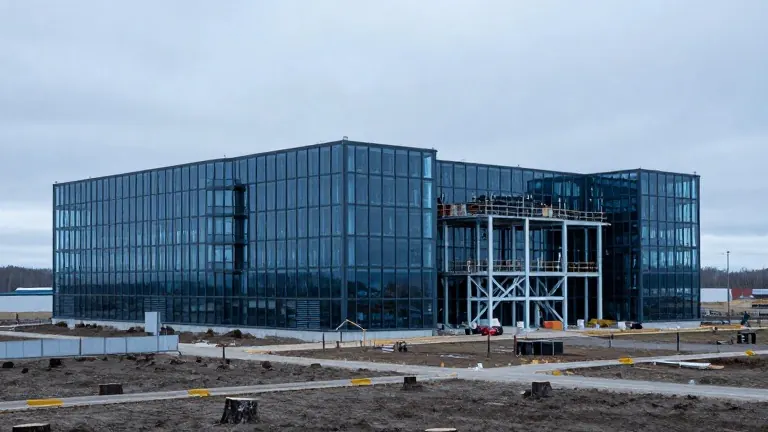
Google has cut down 250,000 trees across 530 hectares in Finland to build data centers, an action that triggered fresh outrage over the environmental costs of the digital economy.
The tech giant stated it believed its subsidiary held all necessary permissions for the land clearing, but that subsidiary is now under investigation for environmental degradation.
The incident has intensified scrutiny on the power demands of artificial intelligence infrastructure. New research published by the BBC indicates that four hyperscale data centers planned for the United Kingdom could undermine national efforts to reach net zero emissions by 2050.
The study projects that these facilities may be powered by gas-fired plants. If that occurs, they would generate more greenhouse gas emissions than the cities of Manchester, Liverpool, and Southampton combined.
This energy challenge coincides with growing concern over the labor conditions within the sector. An investigation by Investigate Europe found that the push for tech sovereignty is increasingly reliant on the exploitation of migrant workers.
The report documented severe safety and living issues across the continent. In Belgium, a worker was electrocuted and fell into a five-day coma. In Sweden, employees were housed in accommodation without heating during sub-zero winters, leading one Romanian worker to contract tuberculosis.
Legal disputes over these violations have yielded results for employees. In Sweden, data center workers associated with Microsoft won a court award of 1.3 million euros for labor violations.
The expansion of data centers is not the only source of tension in Europe. In Poland, Prime Minister Donald Tusk is engaged in a standoff with the president over the composition of the constitutional court.
The dispute arose after judges attempted to physically block the president from entering the court. The Financial Times notes that Tusk's government seeks to restore the rule of law after eight years under the Law and Justice party, without using extralegal methods.
Critics from the Law and Justice party accuse Tusk of backing a coup, while the Wall Street Journal frames the conflict as a wider European crisis regarding the authority of national constitutions versus EU law.
Political analysts suggest the nationalists hope to topple Tusk through this row. Some fear the far right may rally crowds to storm the court, which is located near the prime minister's offices.
In France, a different type of economic activity is drawing attention. Cheese has become the most stolen food product in the country, according to The Times. The crime is driven by the fact that cheese theft carries lesser penalties than narcotics trafficking. One recent heist in the French Pyrenees involved the theft of 250 wheels of sheep's cheese valued at 25,000 euros.
Source: France 24
More Business · Bad Business · Report a business · Got a Story?