Lula Rallies Red-Clad Multitudes in Final Push Before Runoff
A massive mobilization in Rio de Janeiro marks the final day of a campaign where a first-round loser seeks a historic victory against a slight favorite.
By Jisoo Vega ·
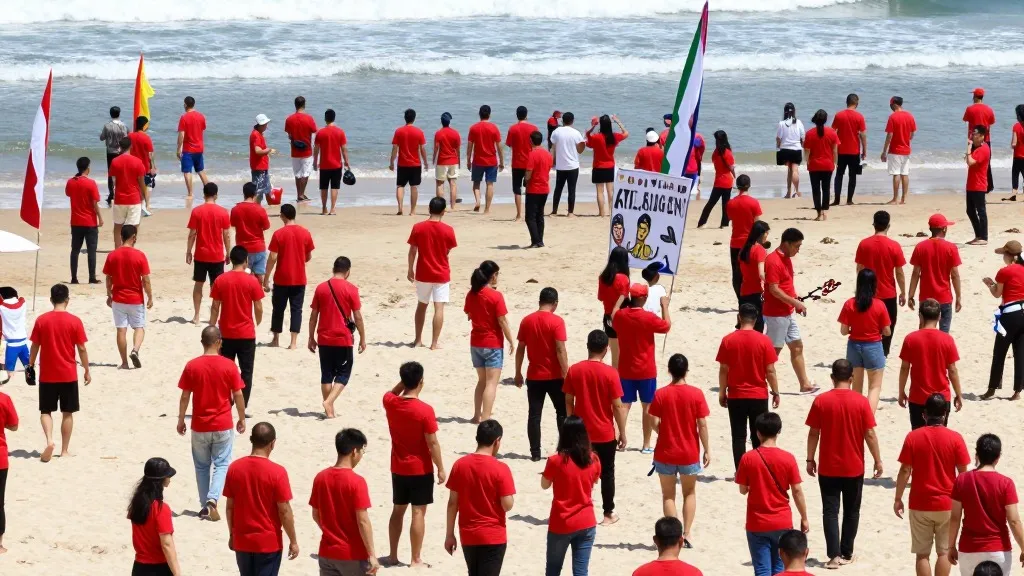
A sea of red clothing surged across Copacabana Beach on Saturday as the nation prepares for a decisive vote tomorrow.
The campaign timeline traces a tight race that began with Bolsonaro taking the first round lead on 4 October. He secured 47 percent of the vote compared to Lula's 45 percent. Since Brazilian democracy was restored in the 1980s, no candidate who trailed after the first round has managed to win the final runoff. Lula's path to victory would therefore mark an unprecedented political shift. Polls currently show the two candidates tied as the election enters its final phase.
Roughly 159 million eligible Brazilians will cast ballots on Sunday. The stakes are high for both contenders, with the outcome determined by a narrow margin. The visual spectacle on the beach served as a final attempt to energize the base and convert undecided voters before the polls close.
Under a bright sun, tens of thousands of supporters filled the 2.5-mile stretch of sand in a procession that resembled a carnival. Activists displayed a massive banner in yellow and green that read, "WE ARE GOING TO TURN THIS AROUND!" Josias Silva, a 61-year-old truck driver, held a homemade sign stating, "Lula re-elected. Tomorrow will be a new day." He noted that recent student-led protests indicated that the public has awakened. Silva predicted a landslide victory of over 60 percent, though analysts expect a much closer result.
Most experts still view Bolsonaro as the slight favorite. He is campaigning on an iron-fist approach to violent crime, leveraging his status as the son of former President Jair Bolsonaro, who served from 2019 to 2022. However, Lula has gained momentum recently due to scandals involving his rival. Last week, Piauí magazine reported that Flávio Bolsonaro attended a boat party with sex workers and vaccine lobbyists during the peak of the 2020 coronavirus outbreak. These allegations have contributed to a climb in Lula's recent polling numbers.
For many voters, the election carries significant personal and historical weight. Jair Bolsonaro is currently serving a 27-year sentence for plotting a coup after his defeat in 2022. Democrats fear he could be released or return to power if his son wins. Reports suggest that fellow plotters, now in jail or exile, might receive senior military and police positions. Marta Moraes, a 59-year-old restaurateur, stated that her opposition targets "Bolsonarismo" specifically. She noted that she lost four relatives to the pandemic due to what she described as negligence by the former president.
The mobilization effort has been coordinated through digital networks. Many attendees are part of "Lula's Army," a WhatsApp group with 10 million members created after the first round. Isabella Gaze, a 64-year-old retired teacher, described the contest as "not a normal election." Cammy Marinho, a 49-year-old DJ and activist, spent the previous two weeks persuading Bolsonaro supporters and abstainers to change their votes. Even young supporters traveled long distances. Fourteen-year-old Heitor Lopes da Silva came from Duque de Caxias in a wheelchair to hold a placard of support.
Bolsonaro's supporters also demonstrated their strength in other regions. In Belo Horizonte, the capital of Minas Gerais, thousands gathered at Praça da Liberdade wearing yellow football jerseys and waving both Brazilian and American flags. This state holds the second-largest electorate in the country and serves as a crucial bellwether. No candidate has won the presidency without carrying this state, and Bolsonaro led there by just under 5 percent in the first round. Antonio Carlos Costa Jr., a 59-year-old shooting club owner, argued that the former president granted citizens the right to self-defense. While he supported the candidate's security message, security experts have noted that previous gun law loosening diverted firearms to criminal gangs. Erika Cavalcante, a 43-year-old architect, carried a sign reading "Don't let the mobsters win," reflecting skepticism about Bolsonaro's ties to paramilitary militias in Rio.
Source: The Guardian