Russia and Iran Sign $25 Billion Deal for New Nuclear Plant
The Sirik facility aims for 5 gigawatts of power, a project that analysts say deepens reliance on Moscow as IAEA access to Iran shrinks.
By Lucas Murphy ·
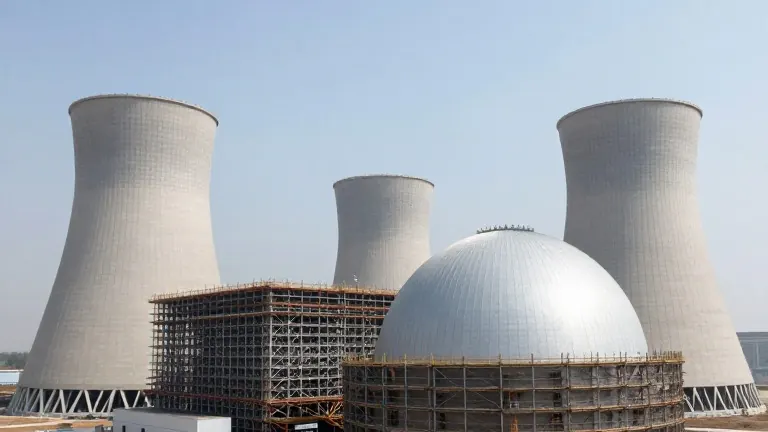
A new nuclear power plant in Iran is projected to cost $25 billion, according to the Iranian state news agency IRNA. The facility, named Sirik, will be built in Hormozgan Province near the Strait of Hormuz. Russian and Iranian officials signed the construction agreement in September 2025. The units are designed to generate approximately 5 gigawatts of electricity.
This contract expands a partnership that began with the Bushehr plant on Iran's southern coast. Rosatom, Russia's state nuclear corporation, signed a contract in 1995 to complete Bushehr's first reactor. That unit only began full commercial generation in 2013. Rosatom reports that construction on a second reactor unit at Bushehr is more than 60 percent complete. The company targets an operational start for that unit in 2029. Work on a third unit has also begun.
The expansion of nuclear ties coincides with a shift in diplomatic leverage. Nikita Smagin, an analyst at the Carnegie Endowment for International Peace, wrote in November 2025 that the balance in the relationship is shifting in Russia's favor. Smagin noted that Iran is in dire need of investment and that Russia remains one of the few available sources. Dmitry Kovchegin and Arkady Mil-Man of Israel's Institute for National Security Studies described Moscow's policy as a calculated balancing strategy. They argued that Russia uses cooperation with Iran to strengthen its position in negotiations with Washington.
The IAEA faces obstacles in monitoring Iran's nuclear activities. In a report published on June 4, the agency stated it inspected Bushehr from June 1 to 3. The agency said it could not carry out inspections at other declared sites during that reporting period. These sites include four uranium enrichment facilities. The IAEA also noted it could not verify the status of nuclear material at those locations. The report said it could not confirm whether Iran had suspended uranium enrichment or reprocessing of spent fuel.
Western sanctions continue to pressure both economies. Russia faces measures targeting its energy, finance, trade, and defense sectors following its 2022 invasion of Ukraine. Iran faces restrictions related to its nuclear program and ballistic missile development. The Arms Control Association stated in June 2025 that enrichment to 60 percent has no civil justification. The group noted that this level puts Iran in a better position to quickly produce enough weapons-grade material for a bomb.
Source: RFE/RL
More Business · Bad Business · Report a business · Got a Story?