Space Station Expansion: Harmony Module Doubled Interior Space in 2007
The shuttle Discovery delivered a critical hub to the ISS, increasing the complex's volume from three-bedroom to five-bedroom house scale.
By Yasmin Kovalenko ·
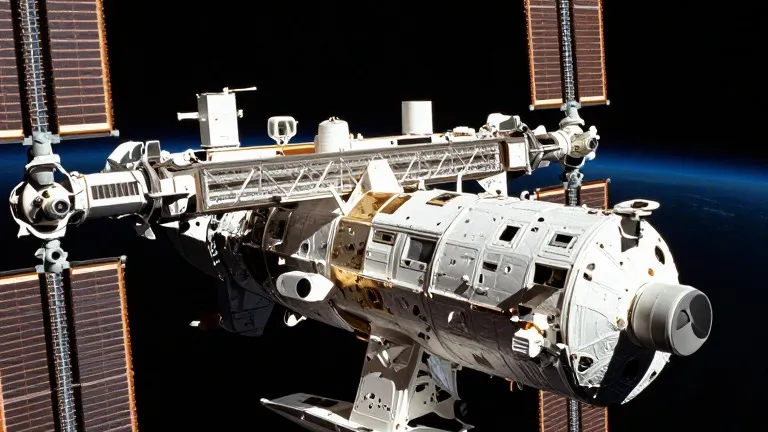
The International Space Station gained a major structural component on October 23, 2007, when the space shuttle Discovery delivered the Harmony module to orbit. This delivery, part of the STS-120 mission, marked a key step in the outpost's physical growth.
Harmony functions as a utility hub measuring 14 feet wide and 24 feet long, a size comparable to a minibus. It serves as the central connection point for the European Space Agency's Columbus module and Japan's Kibo laboratory. The module also contains the primary sleeping quarters for American astronauts.
The installation significantly altered the station's physical footprint. Before Harmony, the complex was roughly the size of a three-bedroom house. With the new module in place, the total volume expanded to match that of a five-bedroom house.
Astronauts initially attached Harmony to the Unity node for temporary storage. After the shuttle departed, the crew used the station's robotic arm to move a docking port away from the Destiny laboratory. This maneuver cleared the path for Harmony to be permanently berthed beside Destiny.
The module was built by Italy-based Thales Alenia Space for NASA. Originally designated Node 2, it followed the Unity node as the second hub developed by the United States. Harmony features five common berthing mechanisms that allow other modules to connect to the station.
The arrival of Harmony ended a six-year gap in new station construction. The previous addition was Russia's Pirs docking module, which was installed in 2001 and later removed. Harmony provided the necessary infrastructure to attach future components to the complex.
Inside the module, eight payload racks hold various equipment. Four racks are dedicated to avionics, while the other four serve as storage or crew living space. NASA selected the name Harmony through a public contest.
Source: Space.com