Tennessee pauses death row operations after expert review details failed injection
Legal filings reveal a 10-needle struggle and a 24-gauge catheter error that left Christa Pike on a ventilator for ten days.
By Jisoo Vega ·
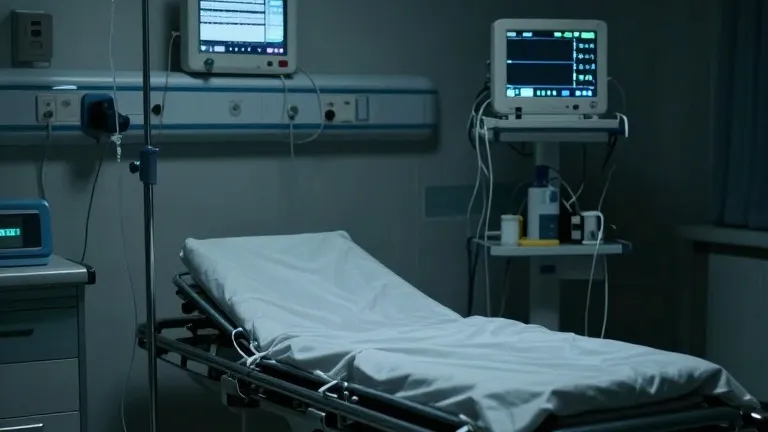
Tennessee has suspended all executions while state officials review the procedure used during the failed lethal injection of Christa Pike. The halt follows new legal filings that detail nearly an hour of struggle inside the death chamber on September 30. Pike survived the dose of pentobarbital that is typically fatal to adults.
Randy Spivey, Pike’s attorney, submitted a chronology of the event to the court on Thursday. The document states that four members of the intravenous team attempted to secure a line in Pike’s arms for almost 60 minutes. They used approximately 10 needles in the process. Spivey’s account notes that the team repeatedly probed her veins without success.
Jonathan Groner, an emeritus professor of clinical surgery at Ohio State University, reviewed the timeline. He described the scene as lacking clear command or a coherent plan. "I'm shocked and disturbed by what happened inside the death chamber," Groner said. "The level of incompetence is astounding, and difficult to comprehend." He noted that the conduct described would be considered medical malpractice in any other clinical setting.
The filing details specific errors in equipment selection. At 7:05 pm, a team member requested a 24-gauge needle. Joel Zivot, an anesthesiology professor in Atlanta, testified that this catheter size is standard for infants or small children. Tennessee’s protocol required 50cc of pentobarbital in each arm. Zivot stated there was no way to push that volume through such a small catheter without damaging the vein. At 7:07 pm, a team member confirmed the vein had likely blown.
The team also utilized ultrasound to locate a vein, a technique Groner said requires extensive specialist training. He observed that the operators did not use the equipment correctly. At 7:23 pm, saline was pushed through the line with difficulty. Groner identified this as a clear warning sign. One minute later, the team declared the IV ready and began the injection.
Pike’s legal team had warned the state beforehand that her veins were exceptionally small and compromised. Zivot cited several failures, including a poorly written protocol, a lack of a designated leader, and the use of technology the team may not have been authorized to employ. The experts concluded that the team continued when they should have stopped.
Pike was sentenced to death for the 1995 murder of her classmate, Colleen Slemmer. Following the failed execution, she spent ten days in a hospital on a ventilator. Her lawyers initially assumed she was brain-dead. She has since returned to her prison cell and can talk and walk, though her long-term medical prospects remain unknown.
The pause in executions forces a review of lethal injection, the primary method of execution in the United States. Groner described the current system as a medical charade. "The ultimate penalty in our country, whether one agrees with it or not, is death. It is not torture, then death," he said. Zivot emphasized that medicine prioritizes safety and accountability, elements he did not observe in the death chamber.
Source: The Guardian