Trump's spending and policy choices raise stakes for GOP midterms
Political groups spent $277 million on the Republican ticket, yet voters in key states question the administration's handling of inflation and trade.
By Yasmin Kovalenko ·
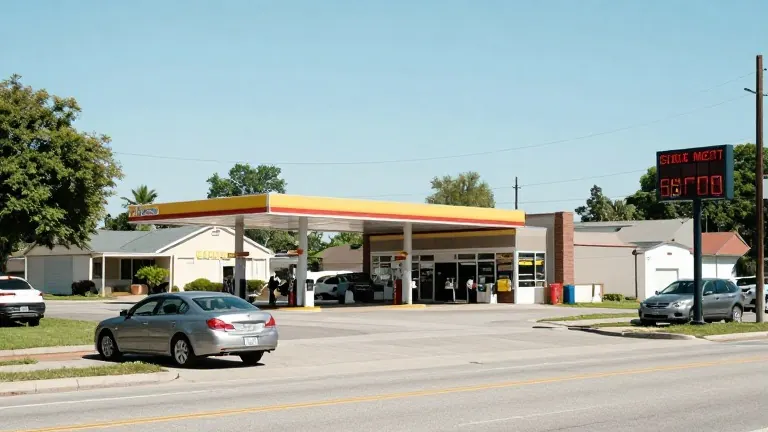
The cost of keeping the Republican majority is rising as voters face higher prices for fuel and food.
President Donald Trump has spent the past year implementing tariffs, launching a conflict in Iran, and approving major renovations in Washington, often without consulting Congress. These actions have created direct links between his administration and the economic pressures affecting households nationwide. Republicans find it difficult to attribute these costs to previous leaders because Trump has publicly claimed ownership of these policies.
The political groups aligned with the president deployed nearly $277 million to support Republican candidates since September. This outlay puts the current cycle on pace to become the most expensive midterm election in history. Despite this financial advantage, the spending may not offset the impact of policy decisions that have disrupted agricultural markets and triggered trade tensions with Canada.
Those trade disruptions have forced Republican candidates in states such as Iowa, Michigan, Kansas, Nebraska, Ohio, and Maine into defensive positions. The administration also initiated a war in Iran that Trump initially described as a short-term operation. Eight months later, the conflict continues without a clear exit strategy, contradicting his earlier pledge to avoid new Middle East engagements.
Former President Barack Obama visited Ohio to campaign for Democrats and argued that the current administration's actions are directly responsible for rising costs. Trump has frequently dismissed affordability concerns, calling them a hoax and telling a rally in Georgia that he does not care about criticism of gas prices. This stance came even as he celebrated increased profits for domestic oil and gas companies.
The president's personal wealth has grown during this period, with $1.2 billion flowing into his crypto businesses while many investors saw losses. This financial trajectory contrasts with the economic strain reported by voters. Former Transportation Secretary Pete Buttigieg, campaigning in Virginia, stated that the perceived corruption in the administration is directly connected to the economic pain people are feeling.
Infrastructure projects have also become a point of contention. A new ballroom is being constructed over the White House, a project Chief Justice John Roberts called likely unlawful. The administration may begin work on a triumphal arch near Arlington National Cemetery this week. Additionally, Trump plans to close a park along the Potomac River to make way for a golf course, a move he intends to execute despite a federal judge's order.
Historical data shows that midterm elections usually result in losses for the president's party. Democrats gained 40 House seats in 2018 and 31 in 2006. Republicans picked up 63 seats in 2010 but fewer than 10 in 2022. Redistricting has reduced the number of competitive House districts, but Trump's interventions in Senate primaries have added complexity. In Texas, outgoing Senator John Cornyn warned that the administration's choice of Ken Paxton as his successor is weak against Democrat James Talarico.
Approval ratings for Trump stand at about one-third of U.S. adults, according to AP-NORC polling. This figure is lower than the approval ratings for President Joe Biden before the last midterms and for Trump before the 2018 elections. Democrats are using this gap to run advertisements that link Republican candidates to the president. In Michigan, a Democratic ad described Republican candidate Mike Rogers as being fully committed to the war and to Trump.
Republican candidates are attempting to balance loyalty with independence. Ashley Hinson, the GOP nominee for Senate in Iowa, said she would support Trump when it benefits the state but would push back when necessary. She recently visited an ethanol facility in Dyersville with EPA Administrator Lee Zeldin. During the trip, she acknowledged that the deal with Russia to lower diesel prices makes her nervous, noting that lowering fuel prices remains a priority for her.
Source: Atlanta News First
More Business · Bad Business · Report a business · Got a Story?