50,000 Pounds: The Daily Take-Home for Port Sudan Drivers Amid Fuel Crunch
Scarcity and rising costs have forced transport workers to wait days for fuel, leaving many with barely enough income to support their families.
By Jisoo Vega ·
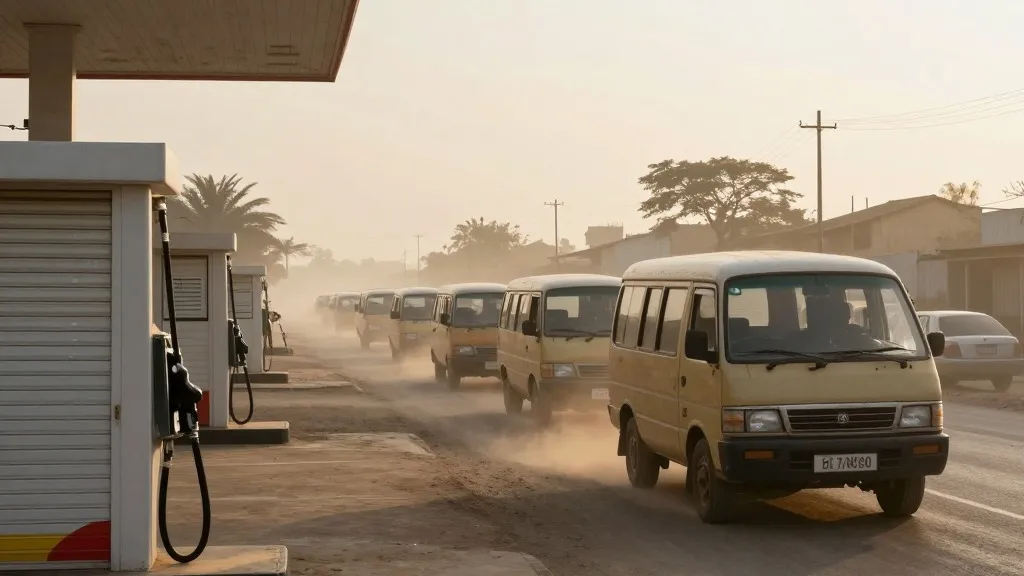
A single day of waiting in a petrol queue can stretch beyond five hours in Port Sudan, a reality that has upended the routines of local commuters and workers. For Azhari Mohamed, a 60-year-old minibus driver, the delay means working two days and spending a third simply standing in line. His vehicle consumes three gallons of petrol daily, a cost that now dwarfs his earnings. When the fuel finally runs out before he reaches the pump, he is sent to the back of another queue, further eroding his already thin margins. This scarcity is the central driver of a broader economic squeeze affecting everyone from cleaners to traders across the region.
The financial toll is stark in the numbers. A gallon of petrol costs 35,000 pounds in Port Sudan and 40,000 pounds in Gazira State. After covering his fuel expenses, Azhari is left with approximately 50,000 pounds per day to support his wife and a daughter in university. This amount represents a significant drop in purchasing power, forcing many workers to reconsider how they allocate their limited resources. The scarcity has also driven up prices in other sectors, creating a ripple effect that reaches well beyond the transport industry.
For Aziza Ibrahim, a 38-year-old cleaner with four children, the burden is even more acute. She has reduced her work schedule to three days a week because the cost of travel has become prohibitive. Before the conflict began, her trip to the city center cost a mere 700 pounds. Today, fares on various routes range from 2,000 to 2,500 pounds, requiring her to spend 11,000 pounds daily for a round trip. This transport expense consumes nearly half of her 400,000-pound monthly salary, a sum that also needs to cover her diabetes treatment. She often borrows money to get to work, repaying the loans only when her next paycheck arrives.
The pressure on workers has led regulatory bodies to adjust fares to reflect higher operating costs. This month, the Sudan's Transport Chambers Union raised intercity bus fares by 40% and minibus fares by 30%. These increases were implemented as a direct response to the climbing price of fuel, which has become increasingly difficult to source. The union’s decision highlights the delicate balance between keeping services affordable for passengers and ensuring that drivers can continue to operate their vehicles.
The root of these shortages lies in the ongoing conflict between the Sudanese Armed Forces and the Rapid Support Forces, which started in April 2023. The World Bank reports that attacks on the Balila oil field have disrupted supplies to the Khartoum refinery, a facility that previously met about 60% of the national demand for petrol and liquefied petroleum gas. With domestic output sharply reduced, the country now relies heavily on imports at a time when global energy prices are high.
Economic analyst Sidi Ohaj notes that government rules for importers have exacerbated the situation. Importers are required to deposit 200 kilograms of gold in the Central Bank and own fuel storage facilities, requirements that some businesses could not meet. This led to a reduction in supply relative to demand. Ohaj argues that easing import procedures is urgent, though he acknowledges that drone attacks and global disruptions from the United States and Iran leave little hope for quick relief.
The crisis extends to the private sector as well. Ahmed al-Haj, a trader in Omdurman, reports that higher diesel and petrol prices have increased the cost of moving a tonne of goods by 30 to 50 percent. Local deliveries that once cost 5,000 pounds now range from 10,000 to 12,000 pounds. As transport workers make fewer trips, goods are piling up at traders' premises, forcing businesses to pass these costs on to consumers.
Source: Al Jazeera
More Business · World news · Bad Business · Report a business · Got a Story?