Austin buses run 22 hours with new chargers
Overhead equipment at two new terminals allows electric buses to top up mid-route, extending daily service time by more than double.
By Lucas Murphy ·
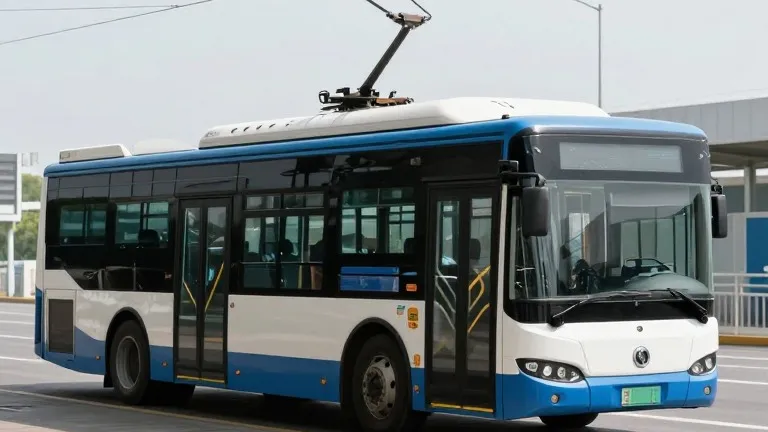
CapMetro, the public transit agency for Austin, Texas, has extended its electric bus service from eight hours to as many as 22 hours. The agency achieved this expansion by installing overhead charging equipment at two new park-and-ride facilities.
The Goodnight Ranch and Expo Center terminals opened on October 23, 2026. They serve the Rapid 800 and Rapid 837 bus lines. These facilities were first announced in June 2026. They feature pantograph-style chargers that connect to the roof of the vehicles.
Andy Skabowski, the agency's chief operations officer and executive vice president, explained that the on-route charging allows buses to remain in service longer. "Instead of a typical bus holding 8 hours of charging, on-route charging takes that out to 20 to 22 hours," Skabowski said. He noted that the system enables service every 10 to 15 minutes.
The charging infrastructure is part of a larger network managed by Camber Charging. The company installed two 1,440 kilowatt charging systems at CapMetro's main bus depot. These systems connect to 48 industrial dispensers. The depot can charge up to 48 electric buses simultaneously overnight. The total capacity of the depot system is 2.9 megawatts.
The new terminals extend this network to the ends of the Rapid 800 and 837 routes. Buses use the overhead chargers to replenish their batteries after completing a run. This process supports the return trip without range limitations. Camber Charging also provides preventive maintenance, energy management software, and remote diagnostics for all three locations.
The vehicles operating on these routes are New Flyer Xcelsior battery-electric transit buses. The Canadian manufacturer states the platform can offer up to 660 kilowatt-hours of available battery capacity. The buses produce up to 320 all-electric horsepower. Full torque is available at zero rpm, a specification suitable for the stop-and-go traffic patterns in Austin.
Source: Electrek
More Business · Tech news · Bad Business · Report a business · Got a Story?