Residential Shift: Amazon Replaces Loudoun Data Center Project With Housing and Parks
The tech giant is converting a planned server hub in Virginia into homes and public spaces after residents voiced concerns over energy use and noise.
By Yasmin Kovalenko ·
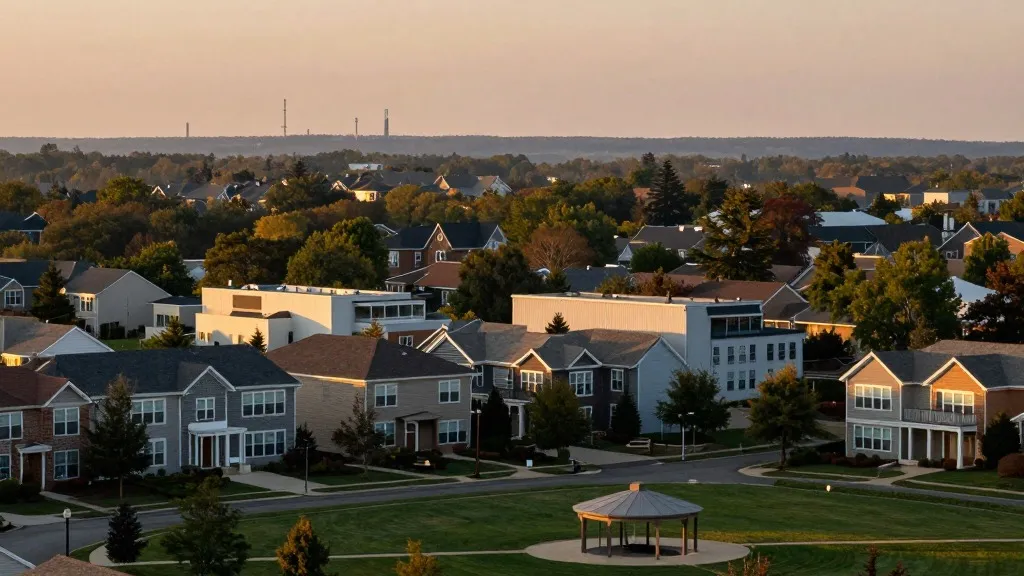
For residents of Loudoun County, Virginia, the landscape surrounding a former university campus is about to look very different. Instead of towering server farms humming with electricity, the area will soon host housing developments, a community arts center, and recreational spaces. This change represents a significant shift in how one of the world’s largest tech companies approaches its physical footprint in a region long associated with digital infrastructure.
The company has officially withdrawn its proposal to construct four major data centers on the 122-acre site. This decision follows intense local resistance and marks a notable departure from the typical development patterns seen in this part of the country. The land, formerly used by George Washington University, will now be largely dedicated to mixed-use and residential projects, offering a tangible change for the neighborhood that has long watched the rapid expansion of digital infrastructure in its backyard.
To sweeten the deal with local officials, the corporation has agreed to several specific concessions. Twenty-five acres of the property will be transferred to the county for public use, including the construction of a new arts center and a recreational facility. Additionally, a five million dollar contribution will be made to the county’s housing fund, an effort aimed at increasing the availability of affordable homes for local families. These moves appear designed to address the community’s desire for public benefits rather than just private corporate gain.
The reversal is particularly striking given the region’s reputation. Loudoun County is often referred to as a hub for data centers, hosting the largest concentration of such facilities anywhere in the world. Despite this density, local opposition has grown in recent months. Residents have cited noise pollution and the massive consumption of electricity as primary concerns. The county’s approach to new construction proposals has tightened, suggesting that the era of unchallenged expansion may be coming to an end.
The timeline of the dispute reveals a quick escalation. The initial proposal was submitted in July of this year. By September, company representatives met with Phyllis J. Randall, who chairs the local Board of Supervisors. During these discussions, Randall suggested that the land might be better suited for other purposes. The subsequent decision to pivot away from servers toward housing indicates that this feedback was taken seriously, or at least that the cost of continuing the fight was deemed too high.
Josh Weissman, the vice president responsible for data center development, explained the rationale behind the change. He noted that the company acted swiftly to acquire the property when the opportunity presented itself. However, he acknowledged the specific concerns raised by the county regarding the site. Weissman stated that while the company viewed the legal development potential differently, they determined that a shared vision was preferable to expensive legal battles. This pragmatic approach highlights the growing friction between corporate expansion plans and local governance.
The broader context for this shift includes the exploding demand for data storage and processing power, driven largely by artificial intelligence. While these facilities are essential for modern cloud services, their environmental and economic impacts have come under scrutiny. Communities are increasingly wary of the effects, including rising electricity prices for local users. Issues such as water scarcity and deforestation are also becoming central to the debate over where and how these massive facilities are built.
National political dynamics are also playing a role in this evolving landscape. Just days before the announcement in Virginia, President Donald Trump urged large technology companies to compensate local communities for energy price increases. He proposed that data centers should generate their own power and return surplus energy to local grids. This political pressure adds another layer of complexity to the decisions being made by developers in regions like Loudoun County.
Local leadership has framed the outcome as a success of cooperation. Randall emphasized that choosing dialogue over conflict created a better opportunity for the county. She highlighted the new gathering spaces and the focus on providing attainable housing for working families. For many residents, this resolution offers a rare instance where community input directly altered the fate of a major development project, setting a potential precedent for other regions facing similar infrastructure proposals.
Source: Tom's Hardware
More Business · Tech news · Bad Business · Report a business · Got a Story?