Hidden Letters From Vanished French Fleet Resurface in Paris Book
Intimate correspondence from a scientist aboard the missing La Pérouse expedition offers a personal account of the 1785 voyage.
By Jisoo Vega ·
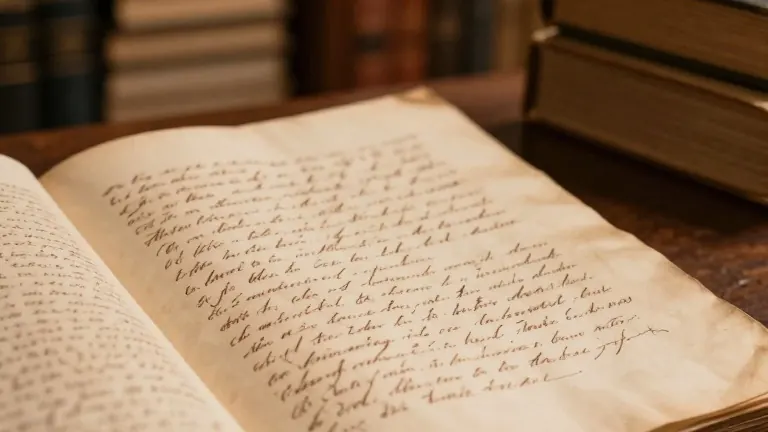
The French monarchy’s most ambitious maritime project ended in silence and loss. A set of personal letters written by a scientist on that expedition has now been found, offering a rare glimpse into the private lives of the crew before their ships vanished.
The letters were authored by Jean-André Mongez, a canon and science director, in 1785 and 1786. He addressed them to Louise Victoire Le Cloustier, the married daughter of a minor noble family from Rouen. The documents were discovered hidden inside a 19th-century book of engravings by auctioneer Benoît Derouineau in Paris.
Derouineau said he did not immediately recognize the significance of the pages. He noted that the letters had been carefully preserved and likely hidden from the recipient's husband. They are now scheduled for sale as a single lot by the auction house Daguerre on 17 November. The estimated value is between €30,000 and €50,000.
Ludovic Miran, a book and manuscript expert at Daguerre, called the discovery a miracle. He explained that most existing records from the expedition are scientific in nature. These personal notes provide a different perspective on an event that remains a major historical mystery in France.
Mongez wrote to Le Cloustier while serving aboard the La Pérouse expedition. The fleet, commanded by Jean-François de Galaup, count of Pérouse, sailed from Brest on 1 August 1785. The mission aimed to rival the discoveries of British explorer Captain James Cook and to establish trade routes in the Pacific.
The expedition carried 225 crew members, officers, and scientists. For nearly three years, the ships La Boussole and L’Astrolabe sent reports from stopovers in Alaska, California, Asia, Russia, and Samoa. The fleet departed Botany Bay in Australia in March 1788 and was never heard from again.
At the time of Louis XVI’s execution on 21 January 1793, the king reportedly asked if there was news of La Pérouse. The ships were eventually identified as having foundered on coral reefs at Vanikoro, east of the Solomon Islands, during a tornado. Wreckage was located in 1826 and 1964, but formal identification did not occur until 2005.
Miran analyzed the tone of the correspondence and suggested Mongez was unhappy about Le Cloustier’s marriage. The scientist wrote that he would return as a better man. Miran believes this emotional conflict may have motivated Mongez to join the perilous journey. He noted that Mongez admitted to leaving for fame and knowledge, despite already having a successful career.
The letters describe the harsh conditions of the voyage. Mongez recounted the killing of the Astrolabe’s captain and 11 men during a stopover. In his final letter, he expressed a desire to return home, stating that the unhappiness of the journey outweighed the modest scientific results. Le Cloustier died in 1821 without learning the fate of the expedition or her correspondent.
The discovery adds a human dimension to a historical event that was largely viewed through a political and scientific lens. The French government had invested heavily in the mission to counter British colonial expansion. The personal struggle of the crew members, as detailed in these letters, offers a new layer to that narrative. The auction will take place at the Hôtel Drouot in Paris.
Source: The Guardian