Iranian President Blames US for Truce Collapse
Pezeshkian accuses Washington of voiding the interim pact as Israeli and US midterm elections approach.
By Lucas Murphy ·
Iranian President Masoud Pezeshkian placed the responsibility for the collapse of the interim war agreement on Washington.
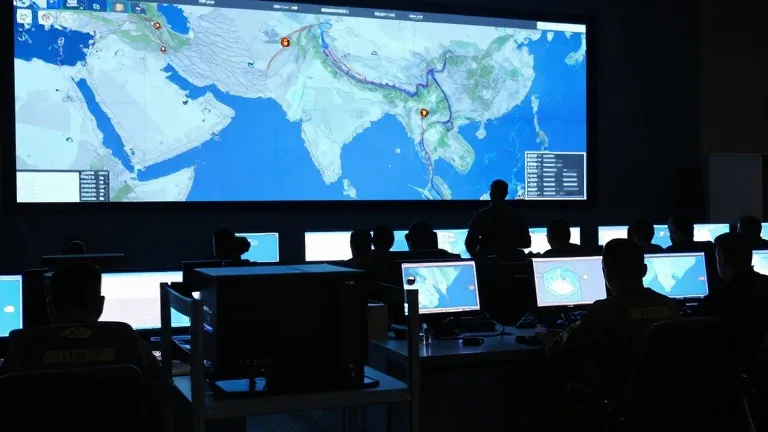
The conflict began on February 28 with the initial US and Israeli strikes. Mojtaba Khamenei assumed the role of Supreme Leader in early March following the assassination of his father during those opening attacks. He has not appeared in public since taking office. The interim deal was designed to halt the fighting, but tensions escalated in late October. President Donald Trump stated on Friday that he might launch another operation using the codename Epic Fury. Pezeshkian responded on Saturday via Iranian Press TV, arguing that the United States ended the truce. He urged both nations to return to the agreement and finalize its terms.
Iranian military leaders have issued strong warnings in response to the potential resumption of hostilities. The Islamic Revolutionary Guard Corps stated through the Fars News Agency that even limited strikes would provoke a reaction several times greater. Ali Abdollahi, the Chief of Staff for the Iranian Armed Forces, declared on Saturday that the US military would not enter the Gulf under any circumstances. He told Trump that he could only dream of seeing American forces in the region and that he would carry that dream to the grave. Spokesperson Fatemeh Mohajerani confirmed that Tehran would not wait for permission to defend itself. She noted in a memo that Iran seeks peace but will respond to aggression with severe consequences.
The diplomatic standoff coincides with major electoral moments for both adversaries. Israeli Prime Minister Benjamin Netanyahu maintains his commitment to overthrowing the Iranian government. Israeli voters are scheduled to choose their next government on Tuesday, October 27. In the United States, Trump faces midterm elections on November 3. Democrats have the potential to win control of both the House of Representatives and the Senate. Such a result would pose a major challenge for Trump, who still has more than two years remaining in his final term. Meanwhile, Iranian judiciary chief Gholamhossein Mohseni Ejei met with Supreme Leader Mojtaba Khamenei on Saturday to discuss corruption and war compensation. Parliament Speaker Mohammad Bagher Ghalibaf met with Khamenei earlier in the week.
Source: Al Jazeera