Lula wins fourth presidency in close Brazilian vote
The 81-year-old incumbent defeated Senator Flávio Bolsonaro by 4.3 million votes, reversing a first-round deficit amid debates over digital campaigning and Amazon deforestation.
By Jisoo Vega ·
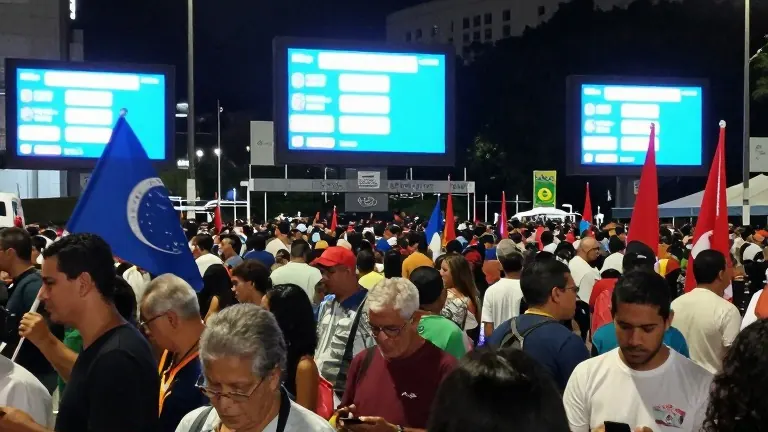
Brazilian voters returned Luiz Inácio Lula da Silva to the presidency for a fourth term, ending a tight runoff that held its lead until the final hours of counting. The result, declared just after midnight UK time on October 26, 2026, marks a sharp reversal from the earlier stages of the election and cements the incumbent's return to power.
Lula, representing the Workers' Party, secured 51.79% of the total vote against 48.21% for his opponent, Senator Flávio Bolsonaro. This margin amounted to approximately 4.3 million votes out of a national electorate of 159 million. Upon the announcement, Lula characterized the outcome as a defeat for denialism, a phrase reflecting the campaign's focus on public health and scientific consensus.
The path to this victory was not linear. In the first round held earlier this month, Flávio Bolsonaro led with 56.1 million votes to Lula's 53.8 million. That initial result represented a share of 47.03% versus 45.16% for the incumbent. Historically, no candidate who finished second in the first round has ever won the subsequent runoff in Brazil's democratic era since 1985. However, polling data tightened rapidly in the weeks between the two ballots, leaving the race within a fraction of a percentage point before the final count.
Several tactical shifts appear to have driven Lula's comeback. The first round saw a record abstention rate of 21%, a trend more common among lower-income voters and progressives who typically support Lula. To counter this, organizers created a WhatsApp channel called Lula's army that distributed daily instructions for creating viral content. Lula, who recently acquired his first smartphone, began posting directly on Instagram and TikTok. This digital push allowed his online reach to surpass that of the Bolsonaro campaign for the first time.
The opposing campaign faced internal pressures and external scrutiny. Flávio Bolsonaro leads the political movement established by his father, former President Jair Bolsonaro, who is currently serving a 27-year prison sentence for plotting a coup after losing the 2022 election. The campaign was also affected by scandals, including a report by the magazine Piauí alleging that Flávio Bolsonaro attended a boat party in 2020 with sex workers and vaccine lobbyists. Additionally, a dozen watchdog groups published reports claiming that Meta favored the Bolsonaro campaign on its platforms. Brazil's electoral court ordered Meta to prevent unequal treatment of candidates, though the company called those allegations false and unfounded.
International relations also played a role in the final stretch. President Donald Trump did not formally endorse Flávio Bolsonaro but described the trial of Jair Bolsonaro as a witch hunt and imposed 50% tariffs on Brazilian imports. Lula positioned himself as a defender against what he termed colonial designs, pursuing a foreign policy that balances ties with the United States, China, and Russia. He also declined invitations to join a Latin American military coalition against drug cartels that included Pentagon operations.
The election carries implications for environmental policy. Under Lula's previous administrations, Amazon deforestation dropped by more than 70%, and his government enacted measures against illegal mining and supported Indigenous communities. Tom Phillips, the Guardian's Latin America correspondent, noted that environmental issues were a minor topic in the final debate, with voters prioritizing the economy and public security. Lula must now work with a newly elected congress that features a record number of right-wing politicians who are often hostile to environmental causes.
Flávio Bolsonaro has refused to concede the loss, citing the decision to extend voting hours by two days. He stated it was impossible to accept the result, a claim both campaigns had supported for different reasons. Phillips does not expect the challenge to succeed, noting that world leaders are already recognizing Lula's victory. Bolsonaro may travel to the United States to avoid ongoing criminal investigations. Lula turns 81 on Tuesday.
Source: The Guardian