Ohio data center push puts 1,000-acre farmland sale in spotlight as voters weigh ban
A grassroots coalition is campaigning for local charter amendments and a state constitutional vote in 2027 after secretive property deals drew criticism from residents.
By Jisoo Vega ·
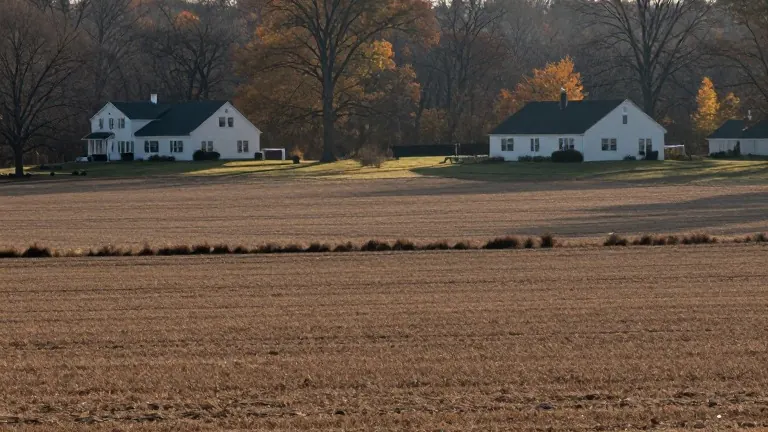
Property records show that 1,000 acres of farmland and trees in Mt. Orab, Ohio, were sold to a data center developer in 2024 and 2025. Construction has not started at the site, but the sale has sparked a statewide movement to restrict large-scale computing facilities. The project sits in a rural exurb of Cincinnati where some of the land borders two-story homes.
Nick Owens, a local attorney and lifelong Republican, spent months investigating the transaction. He found that nondisclosure agreements prevented residents from learning details about the development. Owens joined forces with another attorney and a real estate agent to form a volunteer network called Conserve Ohio. The group spans nearly all 88 counties in the state and includes Democrats, Republicans, and Independents.
Owens says the group formed to preserve the local way of life. "We all share the same ethos and the same passion for preserving our way of life, preserving the future of Ohio, frankly, from the hyperscale data center invasion," Owens said. "It's really beautiful."
This fall, Conserve Ohio supports ballot initiatives in 10 communities that would amend local charters to prohibit large-scale data centers. These centers are designed to power artificial intelligence. The measures go beyond temporary construction pauses that hundreds of municipal and county governments have adopted. Owens argues that the initiatives will test whether communities actually want the facilities. "All too often you hear from the politicians, 'Well, the community should have a say,'" Owens said. "We're going to find out in ten communities whether or not the communities want them."
The group is also preparing a petition for an amendment to the Ohio state constitution that would ban large-scale data centers statewide. The goal is to put the measure to voters in 2027. Tech companies have built data centers in Ohio for more than a decade, drawn by inexpensive land, energy infrastructure, and tax breaks. The state now has some of the fastest data center growth in the country.
Residents argue that the economic benefits, including tax revenue and construction jobs, do not outweigh the constant noise and emissions from new power plants. Owens suggests building centers on old industrial sites rather than pristine farmland. "If we're going to have data centers, those are the prime places," Owens said.
The issue has become a key topic in the midterm elections. Former Democratic Senator Sherrod Brown has called incumbent Republican Senator Jon Husted "the face of data centers." Brown points to Husted's past support for tech investments during his time as lieutenant governor. Husted has countered that Brown also supported data centers previously. Husted introduced a bill in Congress to make data centers pay for power grid upgrades. Senate Democrats blocked the bill, calling it ineffective.
Linda Moodie, an independent volunteer in Fairfield, Ohio, does not trust current candidates to give residents a say in the buildout. She plans to vote for Brown because he has discussed the issue for a longer period. Between now and election day, Moodie is collecting signatures for the statewide ban. She recently set up a booth at a Halloween celebration in Fairfield, handing out clipboards to parents while giving candy to children.
In Mt. Orab, a county that voted 80% for President Donald Trump in 2024, campaign yard signs are scarce. Owens says the data center issue and high diesel prices have reduced Republican enthusiasm. Trump recently posted on Truth Social that communities wanting to stop data centers are choosing to be backwards and poor. Owens called the comments tone deaf, stating that residents simply want their regular way of life.
The state constitutional amendment petition will determine whether Ohio voters decide on a statewide ban in 2027. The local charter amendments in 10 communities will be decided by voters this fall.
Source: WFAE