Ten State Senate Races Will Decide Control of Congress on Election Day
Voters in North Carolina, Georgia, Ohio and seven other states face pivotal contests where economic anxiety and partisan strategy collide.
By Jisoo Vega ·
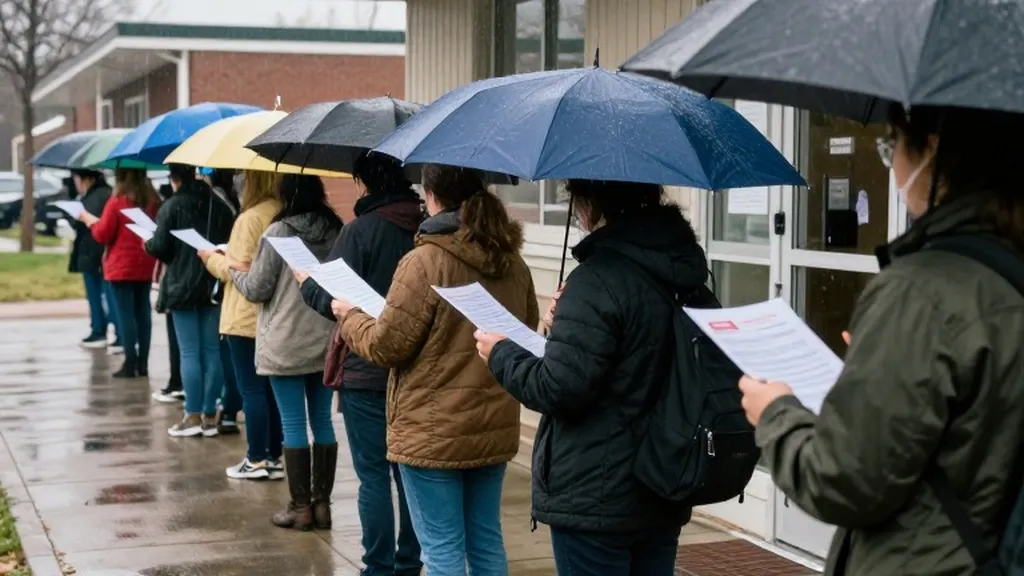
On this Tuesday, November 3, 2026, voters across ten states are heading to the polls to decide the most consequential Senate races of the midterm cycle. These contests in North Carolina, Georgia, Ohio, Michigan, Texas, Maine, New Hampshire, Minnesota, Kansas and Alaska will determine whether Democrats can seize control of the upper chamber. With polls open until closing time in each state, the outcome remains undecided, but the stakes are high for the balance of power in Washington. The Associated Press notes that these races are central to the narrative of a referendum on President Donald Trump’s second term. Voters are weighing the cost of living, health care and the administration’s handling of the war with Iran as they cast their ballots.
The Democratic path to a majority requires a net gain of four seats. Republicans, who currently hold 53 seats, can afford to lose only two to maintain their majority. This arithmetic makes every Senate race a critical component of the national strategy. In North Carolina, the seat of retiring Senator Thom Tillis is up for grabs. Former Governor Roy Cooper, a Democrat, faces Michael Whatley, a former Republican National Committee chair. The Associated Press reports that Tillis decided to step down after a public clash with the President, a move that opened the door for a competitive race in a state that Trump won by 3.3 points in 2024.
In Georgia, Senator Jon Ossoff is defending his seat against Representative Mike Collins. This race is viewed as a lean to likely Democratic contest by several major polling organizations. The margin in Georgia was tight in the 2024 presidential election, with Trump winning by 2.2 points. Voters here are focused on healthcare costs and economic stability. Meanwhile, in Ohio, former Senator Sherrod Brown is challenging incumbent Senator Jon Husted. This special election is a test of Republican strength in a state that voted heavily for Trump in 2024, with a margin of 11.2 points. The Associated Press describes the Ohio race as a key battleground where party loyalty and economic concerns intersect.
Michigan presents another open seat following the retirement of Senator Gary Peters. The contest features Republican former Representative Mike Rogers against Democrat Abdul El-Sayed. On Sunday, El-Sayed’s former primary opponent, Haley Stevens, endorsed Rogers, adding a layer of complexity to the race. The state voted for Trump by a slim 1.4 points in 2024, making it a toss-up to lean Democratic contest according to race ratings. In Texas, Attorney General Ken Paxton, who received the endorsement of President Trump over Senator John Cornyn in the primary, faces Democrat James Talarico. This race is significant because Texas is a reliably Republican state that Trump won by 13.6 points in the last presidential election.
Maine and New Hampshire offer chances for Democrats to flip seats held by Republicans. In Maine, Senator Susan Collins is facing former state Senate President Troy Jackson. The Associated Press notes that economic strain and tariffs have made this state more competitive than in past cycles. Maine voted for Kamala Harris by 6.9 points in 2024, and the race is currently rated a toss-up by all four major trackers. In New Hampshire, Representative Chris Pappas is running against former Senator John E. Sununu for the seat of retiring Senator Jeanne Shaheen. The state voted for Harris by 2.8 points in 2024, and the race is seen as a critical test for Democratic turnout in the Northeast.
Minnesota and Kansas present distinct challenges and opportunities for both parties. In Minnesota, Lieutenant Governor Peggy Flanagan is among four candidates vying for the seat of retiring Senator Tina Smith. The other major candidate is Michele Tafoya, a former sports broadcaster. This open seat is part of a broader push for Democrats to maintain their presence in the Midwest. In Kansas, a state that has historically favored Republicans, the race has become central to the fight for Senate control. The Associated Press reports that the state has become a focal point for both parties, with the 2024 presidential margin showing Trump winning by 16.2 points. The race is rated a toss-up to lean Republican by various organizations.
Alaska adds a unique dimension to the Senate race due to a lawsuit filed by the Trump administration regarding the certification of the result. The state voted for Trump by 13.1 points in 2024, but the race is currently rated a toss-up to lean Democratic. This legal challenge highlights the ongoing tensions between the administration and state election officials. Critics argue that the lawsuit risks disenfranchising eligible voters, while supporters say it ensures the integrity of the vote. The Associated Press notes that the administration has also sued in California, adding to the legal landscape of this election day.
The financial landscape of these races reflects the broader trends in American politics. The 2026 elections are likely to be the most expensive in history. Republican committees have outraised and outspent Democratic committees, aided by Trump-affiliated groups and Elon Musk. However, at the candidate level, Democrats have outraised their opponents. An analysis by the Associated Press of AdImpact data shows that 88.1% of Republican general election TV ad spending went to states and districts Trump won in 2024. This heavy spending in safe Republican areas contrasts with the more targeted spending of Democrats in battleground states.
Voters in these ten states are navigating a complex environment marked by high prices and an unpopular war with Iran. The Associated Press reports that 35% of U.S. adults approve of Trump’s job performance, while about 7 in 10 say the country is heading in the wrong direction. Most blame the President for high prices. In North Carolina, a librarian named James Moore said he is paying more for taxes, healthcare and everything else. In Florida, a voter named Mark Barker said he has been following Trump and believes he is doing an awesome job. These personal stories reflect the broader national mood of anxiety and division.