Senate Math: The 13 Races and Four Seats Democrats Need
With Republicans holding a 53 to 45 lead, Democrats must flip four seats to reclaim majority control in the U.S. Senate.
By Yasmin Kovalenko ·
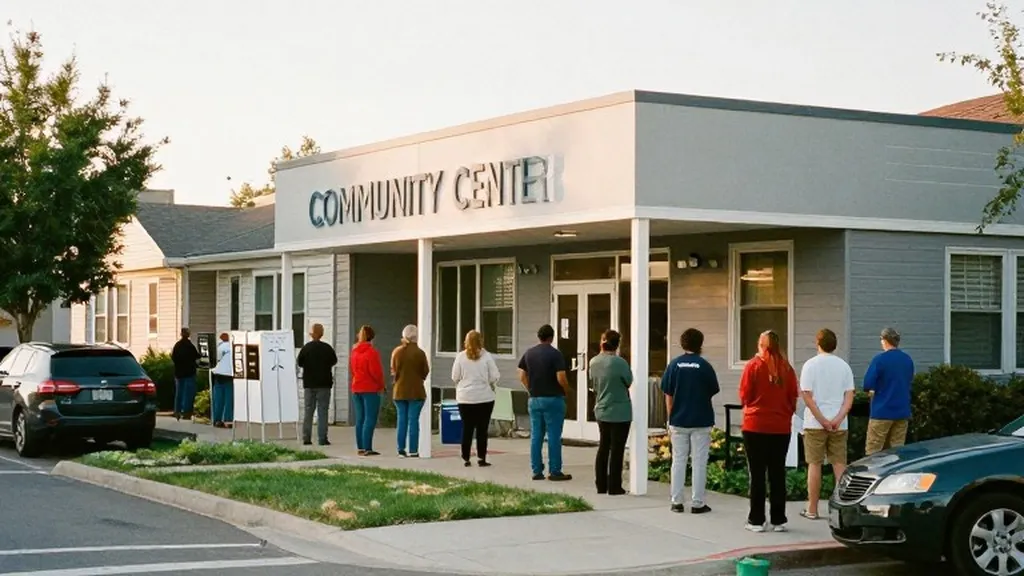
Voters across the nation are deciding the fate of thirty-five U.S. Senate seats on Election Day, a contest that will determine which party controls the upper chamber for the final two years of President Donald Trump's term. According to Ballotpedia, the race involves thirty-three regular elections and two special elections for the remaining terms of Marco Rubio in Florida and JD Vance in Ohio. The current balance of power shows Republicans holding fifty-three seats, Democrats holding forty-five, and two independents who caucus with Democrats. To seize the majority, Democrats require a net gain of four seats, while Republicans can afford to lose only two.
The landscape for these thirty-five seats is defined by thirteen battleground races identified by Ballotpedia. These contests are spread across a mix of states that voted for Trump in 2024 and those that favored Kamala Harris, creating a complex map of political vulnerability. In Georgia, Democratic Senator Jon Ossoff faces Republican Representative Mike Collins in a state where Trump won by 2.2 points in the 2024 presidential election. The Associated Press notes that this race is viewed as a lean to likely Democratic outcome by several rating groups, making it a critical target for Democrats seeking their necessary gains.
In Maine, Republican Senator Susan Collins battles Democratic former state Senate President Troy Jackson for a seat in a state where Harris won by 6.9 points in 2024. The Associated Press highlights that economic strain and tariffs have rendered the state competitive, with all four major rating organizations currently classifying Maine as a toss-up. This classification underscores the tight margins that will determine the Senate's composition, as both parties view the state as a pivotal swing location in the broader fight for control.
Michigan presents another key contest, where Republican former Representative Mike Rogers faces Democrat Abdul El-Sayed in an open seat following the retirement of Gary Peters. Trump won Michigan by just 1.4 points in 2024, making it a highly contested environment. The Associated Press reports that on Sunday, El-Sayed's former primary opponent Haley Stevens endorsed Rogers, a move that may impact the final days of campaigning in a state that remains within the margin of error for either party according to current ratings.
The race in North Carolina features Democratic former Governor Roy Cooper against former Republican National Committee chair Michael Whatley for the seat of retiring Senator Thom Tillis. Tillis chose to step down after clashing with Trump, leaving the seat open in a state where Trump won by 3.3 points. The Associated Press identifies this as a key matchup, with the open nature of the seat allowing both parties to field strong candidates who are attempting to capitalize on local dissatisfaction with the administration's handling of the cost of living and health care.
In Texas, Republican Attorney General Ken Paxton competes against Democrat James Talarico for the seat previously held by John Cornyn. Trump backed Paxton over Cornyn in the primary, signaling strong party support for the incumbent-like candidate in a state that Trump won by 13.6 points in 2024. Despite the strong presidential margin, the Associated Press notes that the race remains a focus for both parties, with Democrats aiming to make gains in a traditionally red state to contribute to their overall Senate strategy.
Ohio offers a special election contest where Democratic former Senator Sherrod Brown faces Republican Senator Jon Husted. Trump won Ohio by 11.2 points in 2024, but the seat is part of the two special elections included in this cycle's tally. The Associated Press describes this as a significant matchup, with Brown attempting to regain influence in a state where the Republican establishment holds firm ground. The outcome here will be crucial for Republicans, who are fighting to hold their majority and prevent a Democratic takeover of the chamber.
Money plays a significant role in these thirty-five contests, as the 2026 elections are likely to be the most expensive in history. According to an Associated Press analysis of AdImpact data, Republican committees outraised and outspent their Democratic counterparts, aided by Trump-affiliated groups and Elon Musk. However, at the candidate level, Democrats outraised their opponents. The data shows that 88.1 percent of Republican general election TV ad spending went to states and districts that Trump won in 2024, including more than $850 million in areas where he won by ten points or more. This financial disparity reflects the Republican money edge, which Democrats must overcome through targeted spending and high voter turnout.
The mood among voters is shaped by high prices and an unpopular war with Iran, with the Associated Press describing the election as a referendum on Trump's second term. Polling from AP-NORC indicates that 35 percent of U.S. adults approve of Trump's job performance, while about seven in ten say the country is heading in the wrong direction. These sentiments drive the Democratic strategy of focusing on the cost of living and oversight of the administration. Democrats are described as cautiously optimistic, while Republicans are bracing to lose the House and fighting hard to hold the Senate, with one or two seats potentially tipping the balance in either chamber.
For Democrats, the path to victory requires flipping four seats to achieve a majority of fifty-one. This goal is complicated by the redistricting in six states, including California, Florida, and Texas, which may not vote as drawn. If Democrats win even one chamber, investigations and possible impeachment proceedings become likely, with House Democratic Leader Hakeem Jeffries outlining a 100-day agenda on the cost of living and oversight. A strong Democratic night would also boost potential 2028 candidates such as Gavin Newsom, JB Pritzker, and Pete Buttigieg, while complicating the path for Vice President JD Vance.