Courts and Postal Service Stabilize Election Day Amid Legal Chaos
Federal judges intervened to pause noncitizen voting rules in two states, while the Postal Service expanded operations to ensure timely ballot processing.
By Lucas Murphy ·
Federal courts intervened on Tuesday morning to address legal uncertainties surrounding voting rules in Alaska and California, providing a temporary shield for voters in the lead up to the close of polls. A federal judge in Alaska temporarily barred the Trump administration from executing a plan intended to prevent noncitizen voting, a move that critics argued could disenfranchise eligible citizens and infringe upon state authority over elections. In California, a separate judicial order required the administration to stop demanding that local election officials segregate ballots cast by individuals appearing on lists of suspected noncitizens. These rulings arrive as the Justice Department threatens to prosecute local election officials, a tactic that has raised fears of interference and intimidation among Democratic stakeholders.
The legal battles are part of a broader strategy by the administration to address what President Donald Trump has described as widespread voting fraud, including claims that noncitizens vote in large numbers. While these assertions have driven the litigation in both states, the immediate effect of the court orders is to maintain the status quo for voters at the polls. The interventions highlight the tension between executive branch efforts to tighten voting standards and the traditional role of state officials in administering elections. For voters in these jurisdictions, the rulings reduce the immediate risk of having their ballots held or scrutinized under new federal protocols on Election Day.
Simultaneously, the U.S. Postal Service implemented additional measures to support the election process, adding hours, staff, and special lines to ensure that mail ballots are counted on time. This logistical expansion is critical in states where a significant portion of the electorate votes by mail or relies on postal services to return their ballots. The added resources aim to mitigate delays that could complicate the certification of results in close races. By increasing capacity, the Postal Service addresses a key concern for election administrators who must process a high volume of mail-in votes alongside in-person ballots.
Wall Street is monitoring these administrative developments closely, as the outcome of the midterm elections could influence investor confidence regarding debt ceiling negotiations and spending on artificial intelligence. The stability of the election process, particularly in battleground states, is seen as a factor in broader economic sentiment. While the markets watch for political signals, the immediate focus for voters remains on the specific issues that have defined this campaign, such as the cost of living and the administration's handling of the war with Iran.
Voters across the country are engaging with a ballot that includes all 435 U.S. House seats, 35 Senate seats, and 36 governorships. The Associated Press describes the election as a referendum on the second term of President Trump, with many adults citing high prices and an unpopular war with Iran as primary concerns. Polling data indicates that a significant portion of the electorate believes the country is heading in the wrong direction, a sentiment that has energized voters in both parties. The high stakes of the election are evident in the number of battleground districts identified by election analysts, with many races closely contested.
In the Senate, thirteen races are considered competitive, with key matchups in states such as Georgia, Maine, and Ohio. In Georgia, Senator Jon Ossoff faces Republican Representative Mike Collins, while in Maine, Senator Susan Collins contends with Democratic former state Senate President Troy Jackson. The AP notes that economic strain and tariffs have made Maine a particularly competitive environment. In Ohio, former Senator Sherrod Brown challenges incumbent Senator Jon Husted. These races are crucial because the outcome will determine which party controls the upper chamber for the next two years of the administration's term.
The House race is equally tight, with Democrats needing a net gain of three districts to secure a majority, while Republicans can afford to lose no more than two seats. Ballotpedia counts 46 battleground districts, reflecting the uncertainty in many races. The new congressional maps in states like California, Florida, and Texas add another layer of complexity to the House contest. These maps, drawn after mid-decade redistricting, may alter the dynamics in key districts, though early voting numbers suggest strong participation in many of these areas.
Governor races in 36 states will also shape the political landscape, with Democrats aiming to hold a majority of governorships for the first time in two decades. In Georgia, former Atlanta Mayor Keisha Lance Bottoms runs against Republican health care executive Rick Jackson. In Nevada, Democratic Attorney General Aaron Ford challenges incumbent Governor Joe Lombardo. These races are significant because they will determine the balance of power at the state level, which can influence policy implementation and future redistricting efforts.
The mood on the ground is one of cautious optimism among Democrats, who are fighting to break the historical pattern of the president's party losing seats in midterm elections. Republican leaders, including RNC Chairman Joe Gruters, have emphasized the importance of turnout, stating that if they mobilize their voters, they will win. The administration's focus on high-turnout states and its use of redistricting efforts have been central to its strategy, though the effectiveness of these tactics remains to be seen as polls close.
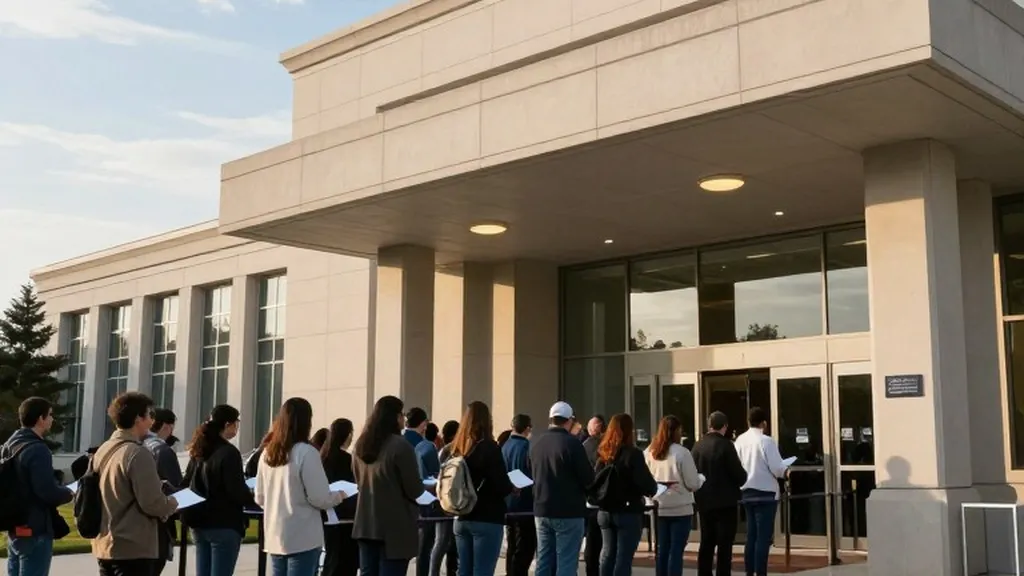
Voters are heading to polling places with varying hours across the states, with many locations open from early morning until late evening. The U.S. Postal Service's expanded operations and the federal court rulings in Alaska and California provide a framework for administering the election under current legal constraints. As the day progresses, the focus will shift to the processing of ballots and the initial reports from key battlegrounds, where small margins could determine the overall outcome of the midterms.